Chapora Fort, Portuguese fort in Bardez, India
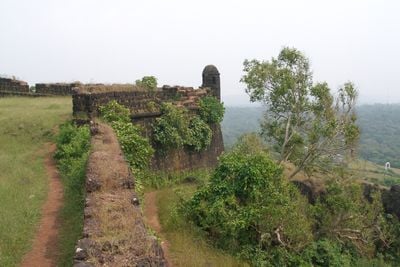
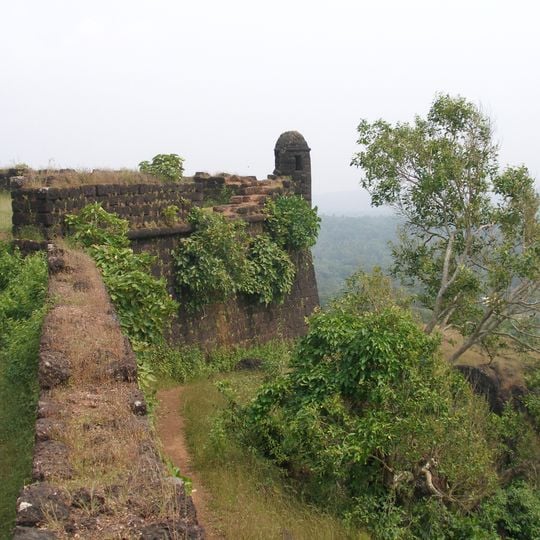
Chapora Fort is a Portuguese defensive structure in Bardez taluk, Goa, India, standing on a hill above the Chapora River. The structure consists of thick laterite walls that follow the natural shape of the terrain, with bastions at several corners and a central gateway on the landward side.
The site held a fort built by Adil Shah of Bijapur, called Shahpura, whose name was later altered to Shapora. The present structure is Portuguese military engineering dated 1617, meant to defend the mouth of the Chapora River and the people of Bardez against Maratha attacks. It fell in 1648 when its Portuguese captain surrendered to Sambaji's forces, was repaired in 1717 with tunnels opened to the beach, fell again in 1739, returned to Portugal in 1741 and was abandoned in 1895.
The fort's name comes from Shahpura, "city of the Shah", given by its Adil Shahi builder; the Portuguese form Chaporá later became Chapora. Inside the walls stand several Muslim tombs believed to predate the Portuguese. The ruins gained wider fame after appearing in the 2001 film Dil Chahta Hai.
The fort is reached by a small ascending path that leads to the gate on the east side. The ruins are open and exposed, with goats grazing among the stones and cashew bushes growing inside the walls. The site is protected by the government of Goa, Daman and Diu.
Inside the walls stand several Muslim tombs that are believed to predate the Portuguese arrival, a detail most visitors walk past on the way to the river view. The fort's outline simply follows the higher slopes, so no dry ditch was ever dug around it.
The community of curious travelers
AroundUs brings together thousands of curated places, local tips, and hidden gems, enriched daily by 94,229 contributors worldwide.