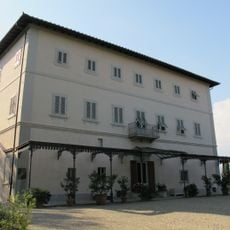
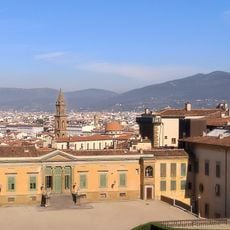
Kaffeehaus in the Boboli Gardens, 18th-century pavilion in Boboli Gardens, Italy
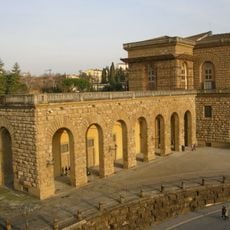
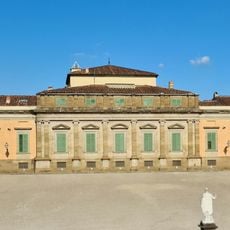
The Kaffeehaus in the Boboli Gardens is a pavilion of three stacked volumes, divided by the horizontal balustrades of its balconies, with alternating concave and convex forms. Its pale green, called "verde Lorena", comes from a 1990s restoration. A double-ramp "a tenaglia" staircase surrounds a small grotto of irregular stones at its base, and the building is crowned by a dome with windows.
The Kaffeehaus was built from about 1776 to designs by Zanobi Del Rosso for Grand Duke Peter Leopold of Lorraine, who came here with his court to drink coffee. The area in front, near the Ganimede meadow, had earlier been planted with vines and orchards under Eleonora di Toledo. The Ganimede garden itself was laid out later, with hedge borders and a fountain documented from 1783.
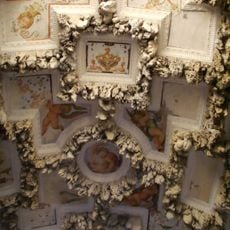
The interior frescoes are by Giuseppe del Moro, Giuliano Traballesi and Pasquale Micheli, the last known only from this work. They show illusionistic views centred on statues and fountains, joined above by a painted pergola with climbing flowers and fluttering birds. Monochrome female figures in medallions above the portals imitate relief carving.
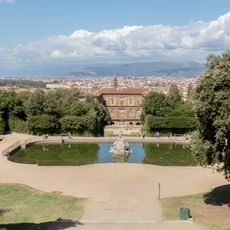
The pavilion stands above the Prato di Ganimede, reached by terraced paths and a double tenaglia ramp that flanks a small grotto at its base. From the top, where a bar once operated, the Viottolone axis begins its descent; the monumental stretch only comes after the grassy Prato dell'Uccellare.
Under the double tenaglia ramp is a small grotto of irregular boulders, where a system of lead pipes once made water trickle in imitation of natural caves. The interior frescoes by Del Moro, Traballesi and Micheli show illusionistic views of statues and fountains under a painted pergola with flowers and birds.
The community of curious travelers
AroundUs brings together thousands of curated places, local tips, and hidden gems, enriched daily by 94,160 contributors worldwide.