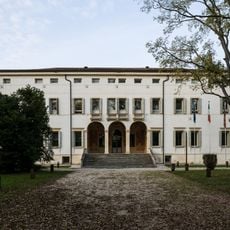
Abbazia di Santo Stefano, Religious abbey in Due Carrare, Italy.
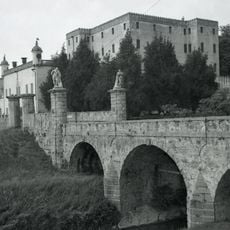
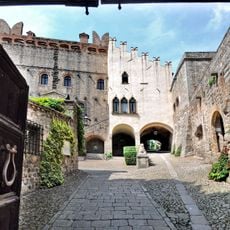
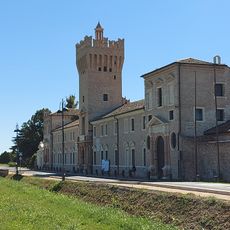
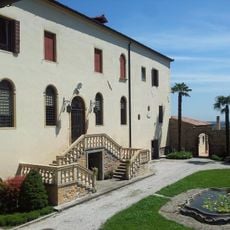
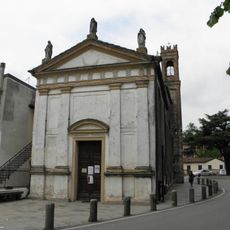
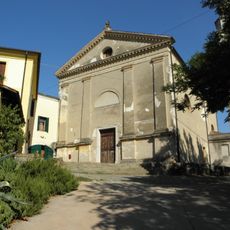
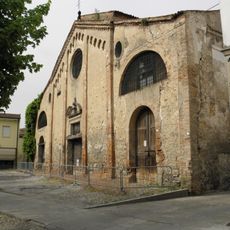
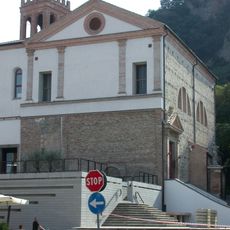
Abbazia di Santo Stefano is a monastery complex in Due Carrare comprising a central stone structure with an adjoining church building. The site displays typical religious architecture of the region with stone walls, arched windows, and simple interior decorative elements.
The first document is Litolfo da Carrara's donation, confirmed probably in 1027, when a church already stood on the site but no monastery existed. Litolfo, head of the Lombard-origin Da Carrara clan, endowed the new monastery richly, and his descendants gave it holdings equal to a quarter of the family's assets. In 1164, backing Frederick Barbarossa, the abbey risked being razed and survived only by submitting to the bishop of Padua, who then prevailed over the family.
The abbey takes its name from Santo Stefano and the Da Carrara family, whose castle stood a few hundred metres away. The abbot's growing unease with that proximity led to a failed plan to move the abbey's seat to San Giorgio in Padua. Today the parish church of Carrara Santo Stefano, in the vicariate of Maserà di Padova, still serves the local community.
The church stands in the hamlet of Carrara Santo Stefano, in the scattered municipality of Due Carrare, province and diocese of Padua. On the northern side a small square carries the plan of the lost cloister traced on its paving, with the rectory facing it; the old cemetery walls run along the southern side. Look down at the pavement to read the cloister layout.
On the small square north of the church, the outline of the lost cloister is traced into the paving; the rectory facing it was once part of the monastery. Almost all other monastic buildings disappeared over the centuries, and with them most memory of an abbey that was among the most important in the Paduan countryside during the Middle Ages.
The community of curious travelers
AroundUs brings together thousands of curated places, local tips, and hidden gems, enriched daily by 93,151 contributors worldwide.