Castello di Gragnano, Medieval castle ruins in Gragnano, Italy.
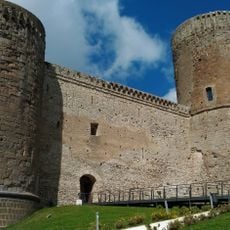
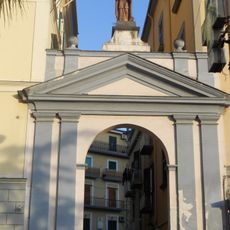
Castello di Gragnano is a ruined medieval fortress above Gragnano, Campania, overlooking the Valley of Mills. Three defensive walls once enclosed it: the outermost ran around the whole valley, the second had twelve towers and three gates, and the innermost held the keep, later demolished for a church. Today a vaulted gate, stretches of wall and tower remains survive.
The castle was built around the 10th century by the Amalfitans, probably on the site of a Roman oppidum, to defend their duchy from Lombard and Norman incursions from the Gulf of Naples. An alternative hypothesis attributes it to the Norman prince Robert Guiscard in 1075. It is first documented in 1077 in the Codex Amalfitanus and peaked in the 13th century as Gragnano's political and religious centre, with the archpriesthood and a church. After the fall of the Duchy of Amalfi it lost its defensive role and the borgo inside gradually emptied as trade moved down into the valley.
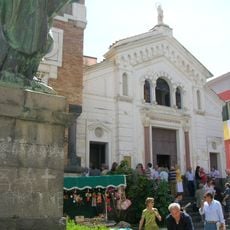
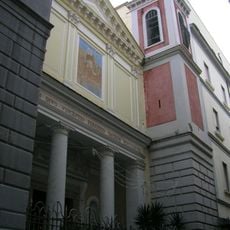
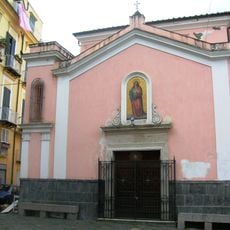
The Church of Santa Maria dell'Assunta sits within the castle walls, showing how religious and secular life existed side by side here. The place was more than a fortress: it was a lived-in center where daily routines and worship were interwoven.
The castle sits in central Gragnano and is easy to reach on foot, with pathways that follow the original Roman street layout. Visitors should expect uneven ground and lack of modern paving in some areas.
Known as Castrum Granianense, the complex was once a complete town with hundreds of residents, not merely a fortress. This is still visible today in how the buildings are arranged and how streets were laid out to serve everyday living.
The community of curious travelers
AroundUs brings together thousands of curated places, local tips, and hidden gems, enriched daily by 94,693 contributors worldwide.