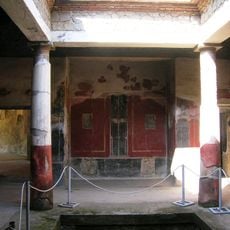
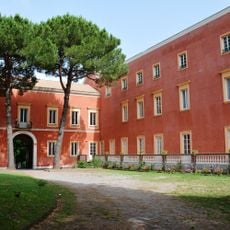
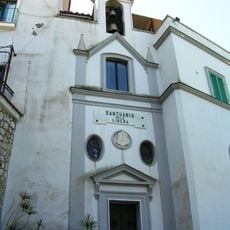
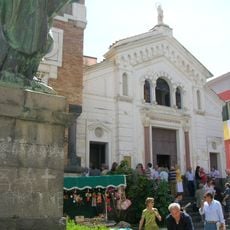
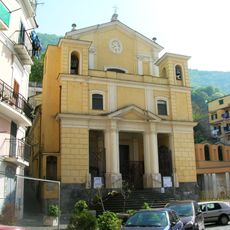
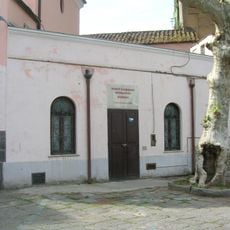
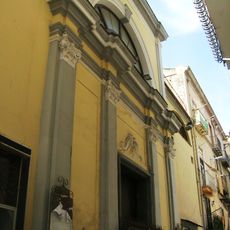
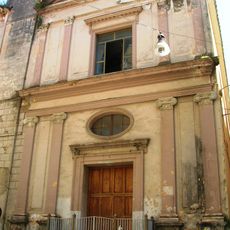
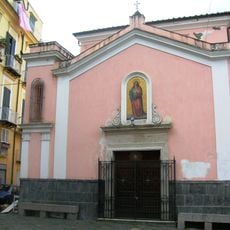
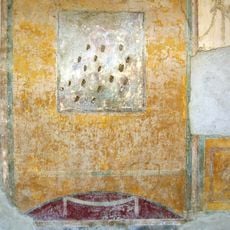
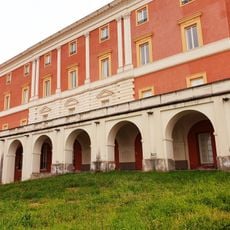
Grotta di San Biagio, Cave church in Castellammare di Stabia, Italy.
Grotta di San Biagio is an excavated cave in Castellammare di Stabia that stretches approximately 27 meters long and 3 meters wide. The interior is organized into an entrance hall, a central nave with four niches along the sides, and an apse at the far end.
Tuff was quarried from the slopes of the Varano hill for Roman villas, creating five cavities; one later became the grotto. Between the 5th and 7th centuries it served as a Paleochristian cemetery, probably of a noble family with a villa at Stabia, who buried relatives and others there after converting. A monk Bernardo, returning from the Holy Land in 870, visited and described it as so deep and dark that torches were needed.
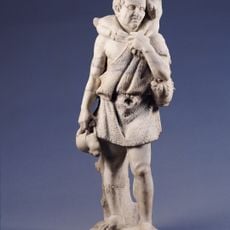
The name San Biagio comes from a misreading: a 14th-century document calls the church after Saints Giasone and Mauro, and the name Iasone was later wrongly taken as Biagio. In the 17th century the cave passed to the wool carders, the carminatores, who chose San Biagio as their protector; fragments of a statue, probably of the saint, were found during cleaning in 2007 and reassembled for the Museo diocesano sorrentino-stabiese.
Access to the cave has been restricted since 1695 when a bishop closed it due to criminal activities in the area. Visitors interested in the site should check local information beforehand, as current conditions and visiting possibilities may vary.
Archaeological digs in 1950 uncovered numerous Christian burials with Roman tiles, revealing that the cave served as a burial ground across different time periods. These findings show how Romans and early Christians used the same location for their respective needs.
The community of curious travelers
AroundUs brings together thousands of curated places, local tips, and hidden gems, enriched daily by 94,553 contributors worldwide.