Monumental cemetery of Verona, Neoclassical cemetery in Verona, Italy
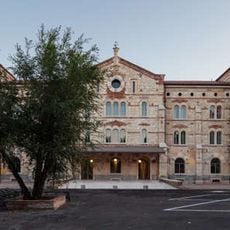
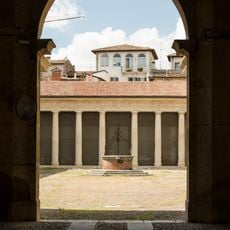
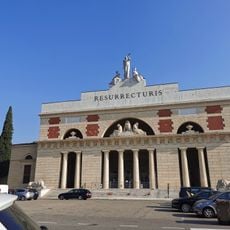
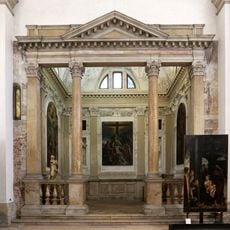
The monumental cemetery of Verona is a neoclassical burial ground in the Veronetta district, built from 1828 on a design by Giuseppe Barbieri. Its central plan is a large enclosure surrounded on four sides by a covered ambulatory supported by Doric columns. At the centre of each colonnade stands a pantheon: Resurrecturis is the main entrance, Piis Lacrimis is modelled on the Pantheon in Rome, Ingenio Claris holds the remains of prominent Veronese citizens, and Beneficis in patriam honours benefactors.
The cemetery was built from 1828 on a neoclassical design by Veronese architect Giuseppe Barbieri, following Napoleon's 1804 Saint-Cloud edict that required burials outside city walls. After Barbieri died in 1838, Francesco Ronzani completed the work within six years. Space ran out within fifty years, so from 1910 the grounds were doubled with a "New Cemetery"; the 1930s added the Garden Cemetery and an ossuary temple.
The four pantheons carry Latin names: Resurrecturis at the main entrance, Piis Lacrimis modelled on the Pantheon in Rome, Ingenio Claris holding Verona's most eminent citizens, and Beneficis in patriam for benefactors. The most opulent family tombs line the covered ambulatories, sheltered from the weather.
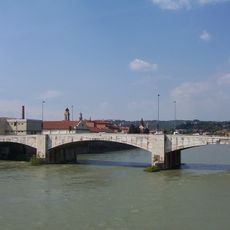
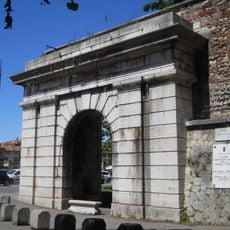
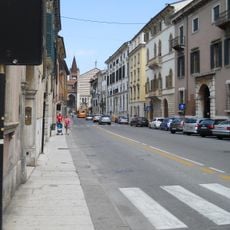
The main entrance is reached by a monumental road lined with tall cypresses, aligned with Ponte Aleardi; the layout is a central square enclosed by a covered colonnade, so you can walk the four sides in a loop. The cemetery lies outside Porta Vittoria, near Verona Porta Vescovo station.
The cemetery is the resting place of several famous artists and writers connected to Verona and the surrounding region. Their tombs and monuments stand as reminders of the city's artistic and literary past.
The community of curious travelers
AroundUs brings together thousands of curated places, local tips, and hidden gems, enriched daily by 92,947 contributors worldwide.