Porta Vittoria, City gate in Verona, Italy
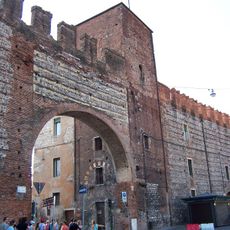
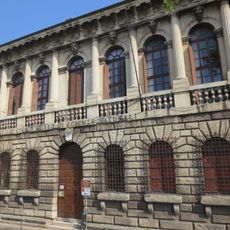
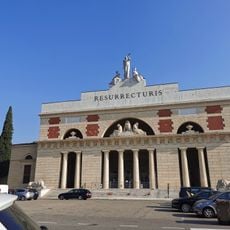
Porta Vittoria is the 1838 neoclassical gate set slightly east of the medieval opening in Verona's Scaliger walls on the left bank of the Adige. It has a single round arch flanked by paired Doric pilasters of smooth-cut stone blocks and originally had a drawbridge; its defensive role was handled by a casemated work outside it.
The original gate was built between 1287 and 1289 under Alberto della Scala as part of the medieval defense system. A major reconstruction in 1838 relocated it slightly east of its original position, giving it the neoclassical appearance it has today.
The gate's name comes from the nearby church of Santa Maria della Vittoria, built by Cangrande II after he foiled a conspiracy led by his brother Fregnano. The medieval gate was earlier known as Porta di Campo Marzio or Porta Pellegrina. In 1838 the medieval gate was closed and a new neoclassical gate opened slightly to the east.
The gate is easy to access and offers a clear passage through the city walls for visitors exploring the old town. Its location directly by the river makes it simple to find from surrounding streets and bridges.
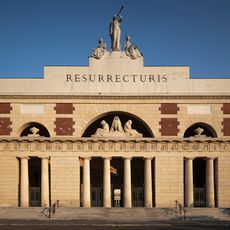
The 1838 gate had a purely civilian role: it led to the new monumental cemetery, while defence was left to a casemated structure outside it. In 1907 a breach was cut in the wall and the medieval tower and gate were demolished, but the 19th-century gate and the stretch of wall toward the Campo Marzo bastion were kept intact.
The community of curious travelers
AroundUs brings together thousands of curated places, local tips, and hidden gems, enriched daily by 94,671 contributors worldwide.