Clinica Columbus, Private clinic in the Liberty villa Romeo-Faccanoni, Milan, Italy
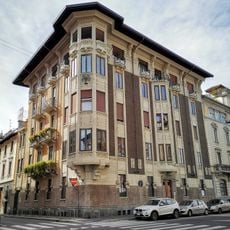
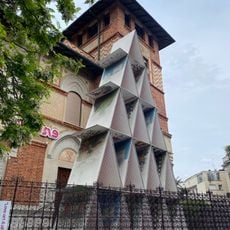
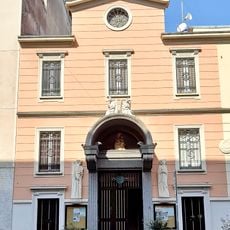
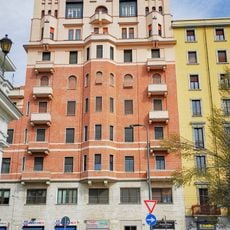
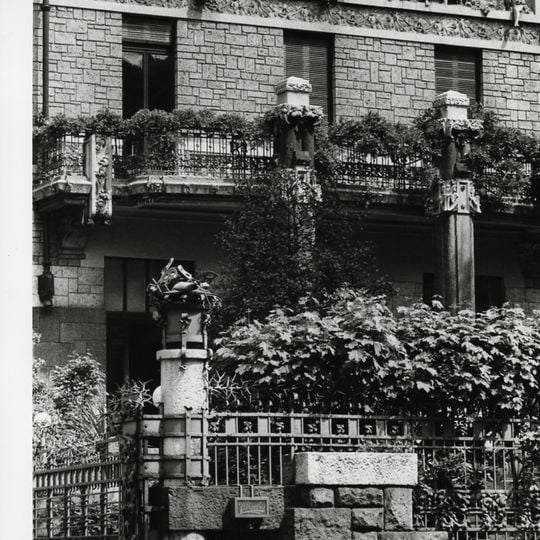
Clinica Columbus occupies the Liberty-style Villa Romeo-Faccanoni at Via Buonarroti 48, in Milan's Magenta area rather than City Life. The rusticated stone facade carries a balcony with iron railing and planted greenery, and tall columns with carved capitals draped in climbing foliage. Behind it, the L-shaped clinic built 1938-1946 by Ponti, Fornaroli and Soncini has a ceramic mosaic wing for maternity and a brick wing for surgery.
Villa Faccanoni was built by Giuseppe Sommaruga between 1911 and 1914 for the engineer Luigi Faccanoni; in 1919 it passed to Nicola Romeo, founder of Alfa Romeo, becoming Villa Romeo-Faccanoni. The adjoining clinic, designed by the Ponti-Fornaroli-Soncini studio for the Suore Missionarie del Sacro Cuore, was begun in 1938, interrupted by the 1943 bombing of the site and inaugurated in 1949.
The name comes from the Columbus Hospital that Francesca Cabrini opened in New York in 1894 to assist Italian emigrants. The villa, bought in 1919 by Nicola Romeo, founder of Alfa Romeo, was decorated by Eugenio Quarti and the ironworker Alessandro Mazzucotelli. Two colossal female nudes by Ernesto Bazzaro, moved here from Palazzo Castiglioni, stand in the complex.
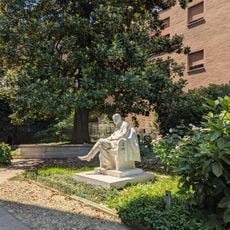
The clinic stands at Via Michelangelo Buonarroti 48, in the block between the Buonarroti and Wagner metro stops on line M1. The Liberty villa faces the street; the 1940s clinic wings and the garden lie behind it. It is a working private hospital, so the garden and interiors are not open to casual visitors.
The villa's garden once held two colossal nude female sculptures by Ernesto Bazzaro, moved here from Sommaruga's Palazzo Castiglioni, nicknamed Ca' di Ciapp because they scandalised Milan in 1903. The clinic's name comes from the Columbus Hospital that Francesca Cabrini opened in New York in 1894 for Italian emigrants.
The community of curious travelers
AroundUs brings together thousands of curated places, local tips, and hidden gems, enriched daily by 92,790 contributors worldwide.