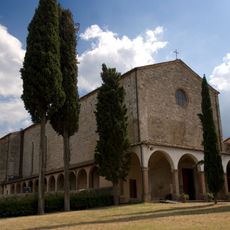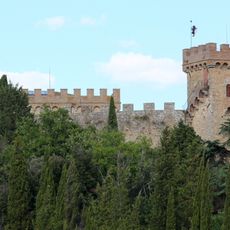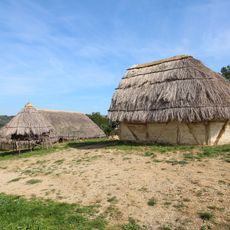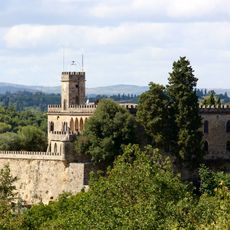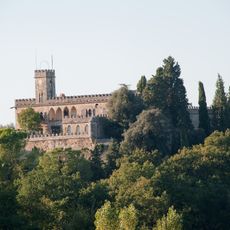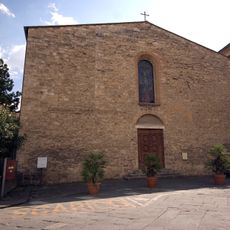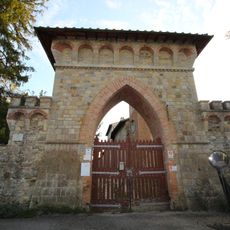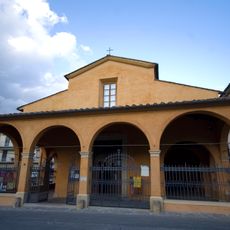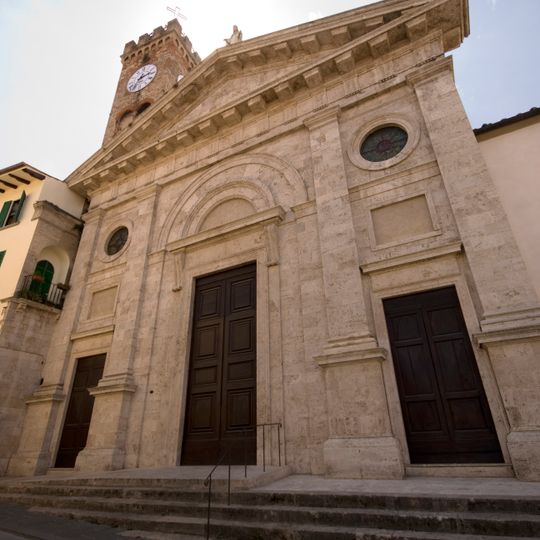
Santa Maria Assunta, Neoclassical collegiate church in Poggibonsi, Italy.
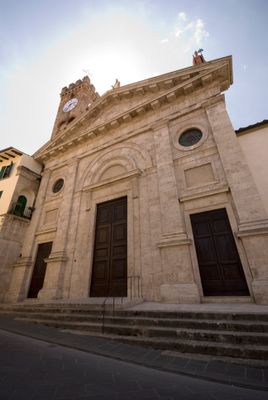
Santa Maria Assunta is a neoclassical collegiate church characterized by white marble columns, clean geometric forms, and balanced proportions. The interior features a structured layout with defined altar spaces and architectural elements typical of 19th-century Italian church design.
The church is documented from the 11th century: in March 1075 the pieve of Santa Maria in the borgo of Martùri hosted a placito granted by Beatrice of Tuscany, and on 4 April 1156 Count Guido Guerra donated part of Montis Bonizi to Siena's consuls there. On 4 June 1203 the Lodo di Poggibonsi fixed the border between Florence and Siena in this pieve. Damaged in 1863, it was demolished and rebuilt in neoclassical forms; the campanile clock was fitted in 1896.
The church's name comes from a pieve documented in 1075, when it hosted a placitum granted by Countess Beatrice of Tuscany for the nearby Martùri abbey. From 1332 town statutes required communal councils to meet in Plebe Sancte Marie, and its bells rang the curfew. A marble baptismal font was installed in 1314.
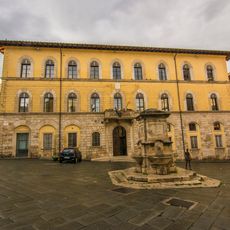
The church sits centrally on the main square with a clear entrance that is easy to find and access. Plan your visit for morning or early afternoon hours when the spaces are well lit and fewer religious services are taking place.
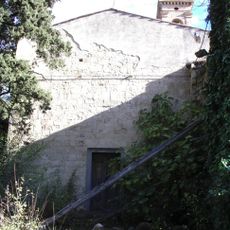
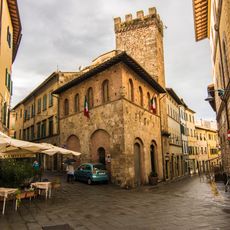
The bell tower is the oldest surviving part of the church, apart from its 19th-century top. In the sacristy storerooms a foliate capital from the old crypt is kept, and on the north flank a single arched window from the earlier pieve can still be seen.
The community of curious travelers
AroundUs brings together thousands of curated places, local tips, and hidden gems, enriched daily by 93,052 contributors worldwide.