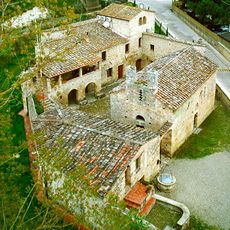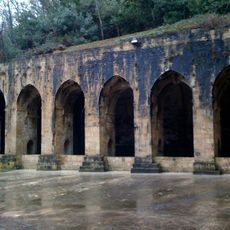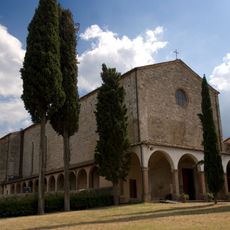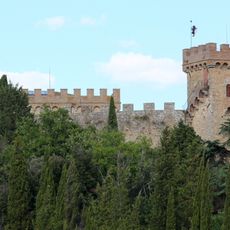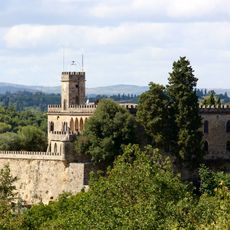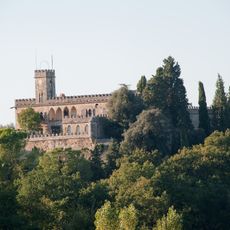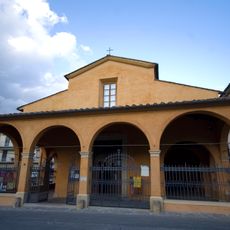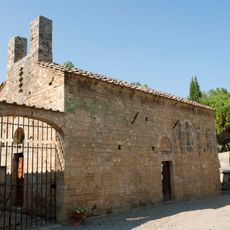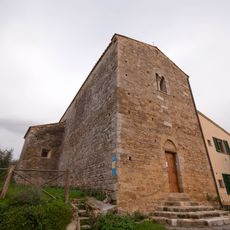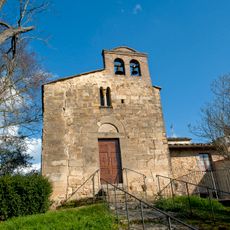
Fortezza di Poggio Imperiale, Renaissance fortress on Poggio Imperiale hill, Poggibonsi, Italy
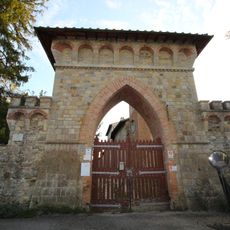
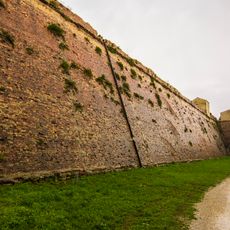
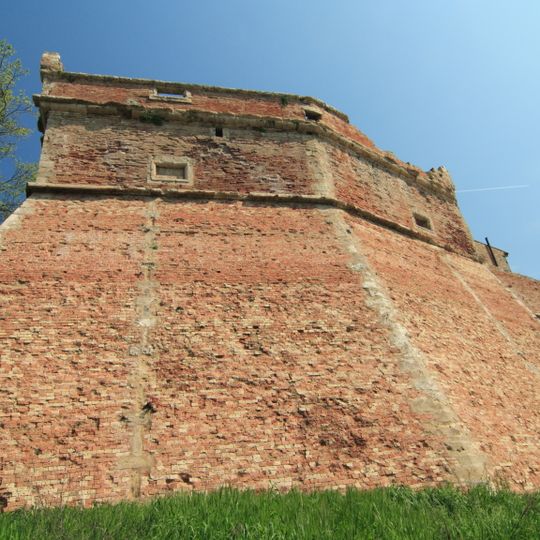
Fortezza di Poggio Imperiale is a military work designed by Giuliano da Sangallo, built from 1488 with his brother Antonio taking over the works from 1496. Its bastioned front has polygonal bastions instead of the circular ones of the Francione workshop, and no projecting machicolated walkway. The outer wall, over a kilometre long, is brick with denticulated travertine courses and survives only on the western side; the completed Porta San Francesco holds an older tower from the walls of Poggiobonizio.
Lorenzo il Magnifico commissioned the fortress after Aragonese troops sacked Florence's southern territory in 1478 during the Pazzi War. Giuliano da Sangallo designed it from 1488, and his brother Antonio took over the works from 1496. Construction stopped unfinished, weakened by Lorenzo's death in 1492 and by the shifting Florence-Siena conflict, leaving the original design largely intact.
The hill takes its name from Emperor Henry VII, who in 1313 planned a city called Monte Imperiale here; the project ended with his death, but the name passed to the fortress. The gate facing Florence is called Porta del Giglio after the city's lily emblem, and the gate looking toward the San Lucchese convent is Porta San Francesco.
The fortress is reachable on foot from Poggibonsi town center by following directional signs, with parking available near the main gate. Wear comfortable shoes for the walk uphill, as the terrain can be steep in places.
The listening gallery runs inside the thickness of the walls at their base, linking the bastions to the gates: guards could hear the noise of enemy mines being dug under the masonry. In Porta San Francesco, past the first doorway, two stone coats of arms of the Florentine Republic flank the entrances to this gallery.
The community of curious travelers
AroundUs brings together thousands of curated places, local tips, and hidden gems, enriched daily by 92,887 contributors worldwide.