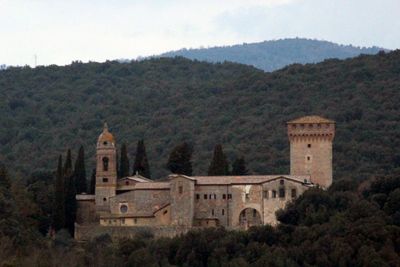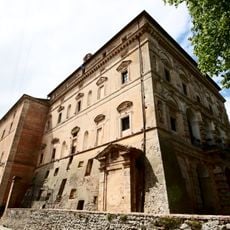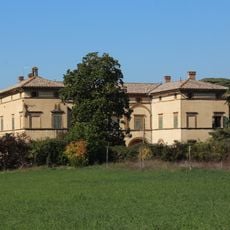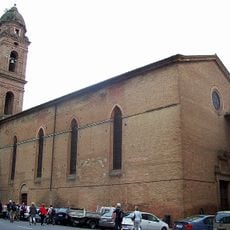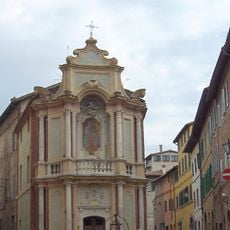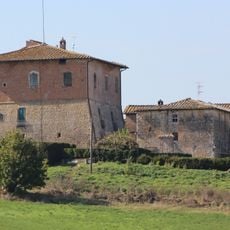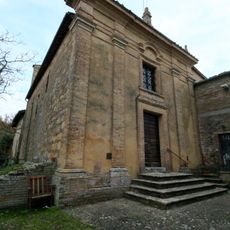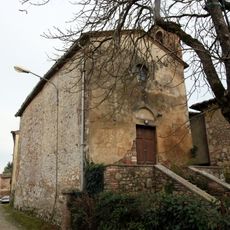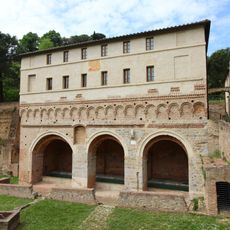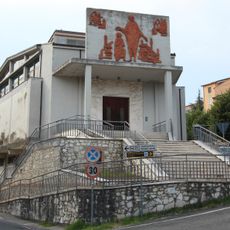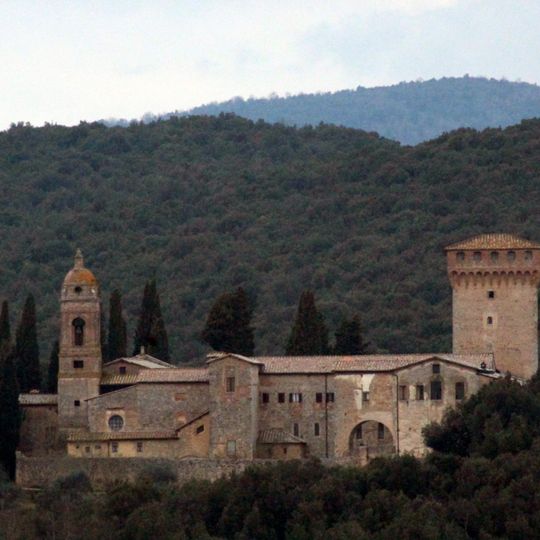
Monastery of the Holy Saviour, Romanesque hermitage in Siena, Italy.
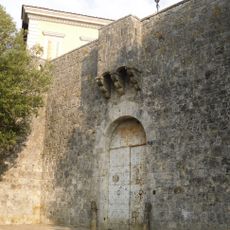
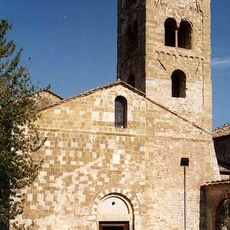
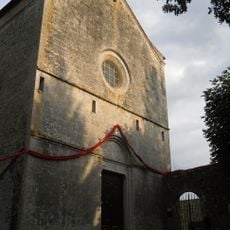
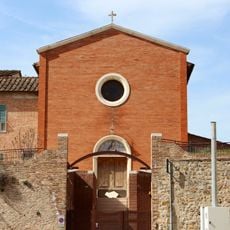
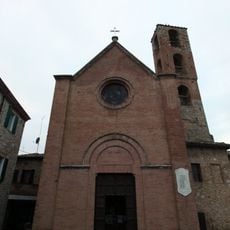
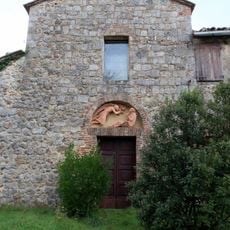
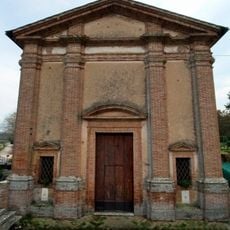
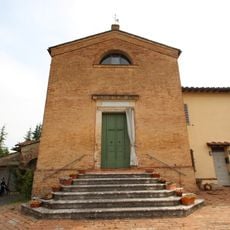
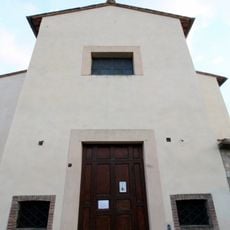
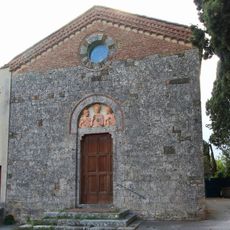
The Monastery of the Holy Saviour is a hermitage complex with a single-nave church, rebuilt in 1317 and enlarged in 1344. Its facade has a blocked oculus and a Romanesque portal, preceded by a portico on polygonal pillars. Monastic rooms surround two cloisters, one Gothic and one 15th-century, with monochrome frescoes attributed to Carlo di Giovanni.
The earliest record of a hermitage here dates to 1223; a church was built in 1227 and rebuilt in 1317, then enlarged in 1344. On 4 May 1256 Pope Alexander IV's bull Licet ecclesiae catholicae united five congregations at Lecceto, making it the principal house of the Augustinian Friars. Florentine troops sacked it in 1554, and it was suppressed and abandoned under Napoleon.
The frescoes inside tell stories of heaven and hell, painted in the 14th century to teach and inspire those who came to pray. These images remain visible today and help visitors understand how the space was meant to guide the spiritual experience.
The hermitage sits outside the city in a quiet rural setting and requires transportation to reach it. It remains an active spiritual retreat, so visitors should approach with respect and be mindful of prayer times.
The hermitage's name comes from the holm oaks (lecci) that once covered the site, called Grallanda, about eight kilometres from Siena. The church is first documented in 1223, and the monastic buildings are arranged around two cloisters, one Gothic and one from the 15th century.
The community of curious travelers
AroundUs brings together thousands of curated places, local tips, and hidden gems, enriched daily by 94,078 contributors worldwide.