Il Golgo, Natural monument in Baunei, Italy
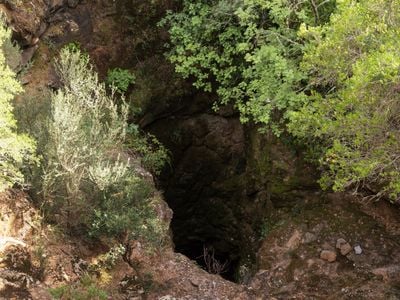
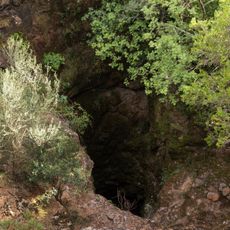
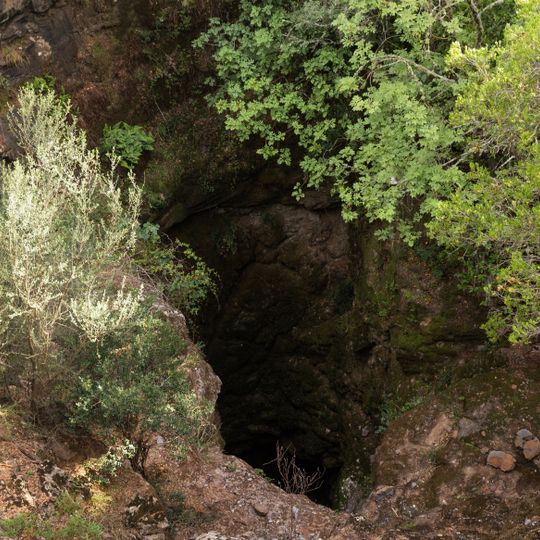
Il Golgo, known in Sardinian as Su Sterru, is a karst sinkhole on the Golgo plateau near Baunei. Its elliptical shaft drops almost vertically for about 295 metres, with a diameter of roughly 25 metres that widens to 40 metres at the bottom. The upper 25 metres consist of black basaltic rock, while the rest is white Jurassic limestone.
Early mapmakers thought this was an ancient volcanic crater, but cavers in 1957 revealed it was actually shaped by limestone being worn away by water over millions of years. This finding changed how scientists understood the geology of this part of Sardinia.
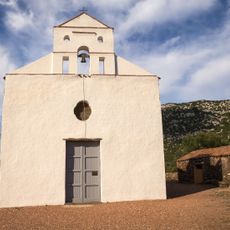
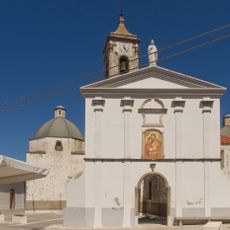
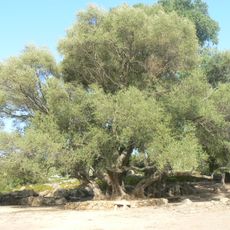
The name stérru means "distesa" (stretch) in Sardinian, from istérrere, but also "scavo" (excavation), so su disterru can mean the abyss. Beside the chasm stands a steel cross placed by the father of Antonio Carta, who fell into Su Sterru on 31 July 1976 while trying to photograph its interior. The plateau also holds the small pilgrimage church of San Pietro di Golgo, once Santu Pedru Olgo, surrounded by cumbessias and wild olive trees, with a face-shaped baitylos in front.
Su Sterru is not equipped for tourist visits and, given its difficulty, is accessible only to specialists; the descent is not a walk-up viewpoint. The chasm opens suddenly on the Golgo plateau near the San Pietro church, past large basalt blocks and water collection basins. A steel cross stands beside the rim, placed by the father of Antonio Carta, who fell in on 31 July 1976 while trying to photograph the interior.
The chasm is home to specialized creatures like the Sardinian cave salamander and rare spider species that thrive only in hidden underground pockets. This hidden world remains invisible to most visitors, yet it forms a complete ecosystem adapted to the darkness and dampness.
The community of curious travelers
AroundUs brings together thousands of curated places, local tips, and hidden gems, enriched daily by 94,213 contributors worldwide.