Naples Mineralogy Museum, Natural science museum in Naples, Italy.
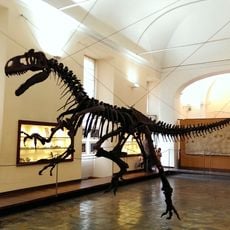
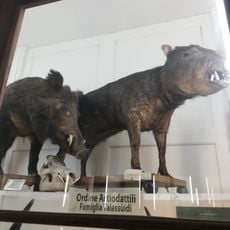
The Naples Mineralogy Museum, or Real Museo Mineralogico, holds about 30,000 mineral samples in the Casa del Salvatore, part of the Federico II university campus. Its rooms cover more than 800 square metres, with the Sala Scacchi displaying the Vesuvian collection and the Sala Monumentale holding large crystals and meteorites.
The museum was founded in 1801 by Ferdinand I of the Two Sicilies and marked the beginning of systematic mineralogical research in southern Italy. This establishment created the foundation for the scientific study and cataloging of minerals in the region.
The museum serves as a working space where students and researchers examine mineral collections from around the world. Visitors can observe how these specimens are organized and get a sense of the global scope of mineralogical study.
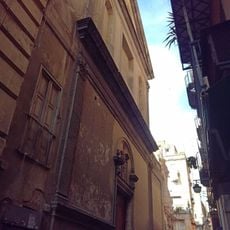
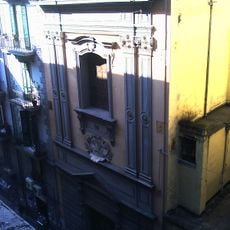
The museum occupies over 800 square metres inside the Casa del Salvatore, part of the Federico II university campus in central Naples. The Sala Scacchi, with the Vesuvian collection, and the Sala Monumentale, holding the Grandi Cristalli, are the two rooms to locate first. The 1980 Irpinia earthquake damaged the Sala Monumentale floor, so restoration work has affected parts of the building.
In the Sala Scacchi, the Vesuvian Collection holds the world's only known specimen of the mineral panunzite, found at Mount Somma. The museum also keeps a 482 kg pair of hyaline quartz crystals from Madagascar, given to Charles III of Bourbon in 1740, and a 7,583 g siderite from Toluca, Mexico, found in 1784.
The community of curious travelers
AroundUs brings together thousands of curated places, local tips, and hidden gems, enriched daily by 94,405 contributors worldwide.