Palazzo Giusso, Renaissance palace in historic Naples, Italy
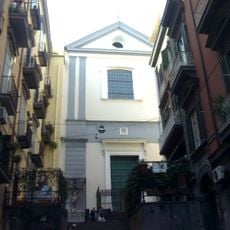
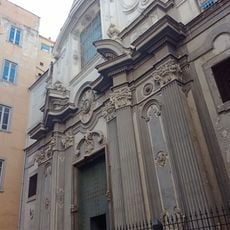
Palazzo Giusso is a Renaissance palace in Naples, begun in 1549 to a design by Giovanni da Nola. Its courtyard has arches on pillars clad in moulded piperno, and a well reached by a small staircase. The facade is divided by composite pilasters on the piano nobile and by pilasters on the ground floor.
Construction began in 1549 under Alonso Sánchez de Luna, who commissioned Giovanni da Nola after buying the site from viceroy Gonzalo Fernández de Córdoba; the work continued for decades under his son. In 1645 Cardinal Ascanio Filomarino acquired the palace, completed it with a piperno portal and kept it in his family for 150 years. In 1799 a servant's accusation led a mob to burn Duke Ascanio and Abbot Claudio Filomarino nearby and sack the building. Banker Luigi Giusso bought it in 1828, and the Orientale Institute leased it in 1931 and purchased it in 1932.
The palace's name recalls the Filomarino family, who owned it for a century and a half after Cardinal Ascanio Filomarino bought it in 1645. A later duke, Ascanio Filomarino della Torre, assembled a celebrated Vesuvian cabinet of rocks and texts on Vesuvius there. In January 1799 a servant's denunciation led the duke and his brother, Abbot Claudio, to be dragged from the palace and burned alive nearby.
The building now houses the University of Naples L'Orientale and can be admired from the exterior, though interior spaces serve institutional purposes. Its location in Naples' old town makes it easily accessible for visitors exploring the city's Renaissance architecture.
Inside the building, a fresco titled 'Hercules at the Crossroads' by Giuseppe Cammarano decorates the Aula Matteo Ripa. This artwork depicts a classical mythological scene and represents the decorative artistic program that once adorned the palace.
The community of curious travelers
AroundUs brings together thousands of curated places, local tips, and hidden gems, enriched daily by 94,367 contributors worldwide.