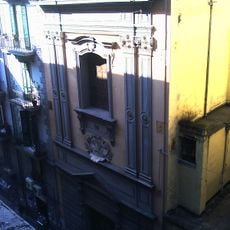
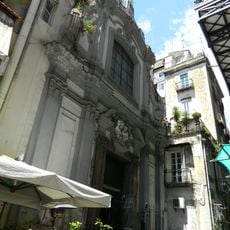
Physics Museum of Naples, museum in Italy
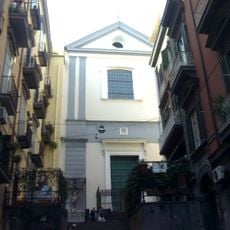
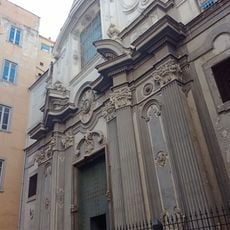
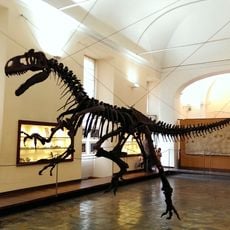
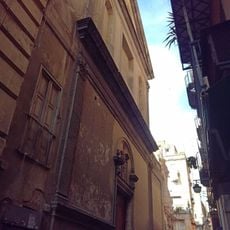
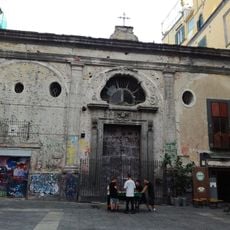
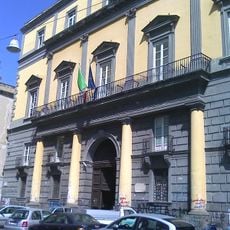
The Physics Museum of Naples is a science museum in Naples, Italy, located in the former Refectory of the Collegio Massimo dei Gesuiti. Built around 1680 by architect Dionisio Lazzari, it displays scientific instruments across approximately 640 square meters divided into three main rooms.
The collections trace back to the 1734 royal instruments Carlo di Borbone brought from Parma and Piacenza, later joined by Ferdinando I's pieces and the Gabinetto Fisico created under Gioacchino Murat. In 1787 the collection moved to the Palazzo dei Regi Studi, was taken to Sicily during the Parthenopean Republic, then returned to the Palazzo Reale. Macedonio Melloni's instruments formed a third nucleus, and in 1878 Gilberto Govi unified everything into one university Gabinetto Fisico. The museum itself was officially established in 1983 and moved to via Mezzocannone 8 on 28 January 2005.
The museum's rooms were the refectory of the Jesuit Collegio Massimo, designed by Dionisio Lazzari in 1680 and restored in 2003-2004. Original stucco decorations remain, along with a 16th-century Circumcision painted by the Sienese artist Marco Pino. The instruments themselves trace courtly and academic science: Carlo di Borbone's royal collection, Ferdinando I's pieces, Murat's Gabinetto Fisico and the Melloni collection.
The museum has clear signage and friendly staff at the entrance. Visitors can easily reach it by public transport, with the nearest station called 'Università' a short walk away.
The museum holds one of the few surviving lenses made by Evangelista Torricelli: an objective lens for a telescope, 111 mm in diameter with a focal length of 6 m, ground in 1654. It is among the collection's prized pieces, alongside an optical bench built by Macedonio Melloni, one of the earliest examples of such apparatus.
The community of curious travelers
AroundUs brings together thousands of curated places, local tips, and hidden gems, enriched daily by 94,250 contributors worldwide.