Museo ebraico Yeshivà Marini, museum in Italy
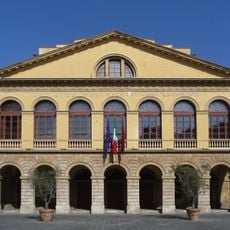
The Museo ebraico Yeshivà Marini occupies the 19th-century oratory of a neoclassical building on Via Micali in Livorno. Inaugurated in 1992, it displays sacred furnishings, silverware and textiles made by Livornese, French and Central European craftsmen, plus a carved wooden Hekhàl that survived the bombing of the synagogue and, by tradition, was brought to Livorno by Jews from the Iberian Peninsula.
The museum opened in 1992 in the 19th-century oratory of a neoclassical building on Via Micali. Its displays document the Nazi-fascist persecutions carried out after the racial laws, alongside sacred objects from Livorno's synagogue. That synagogue was badly damaged in the Second World War and rebuilt to a design by Angelo Di Castro; most of its furnishings were lost, though silver and textiles by Livornese, French and Central European craftsmen survive.
The museum keeps silver and textiles made by Livornese, French and Central European craftsmen, and a collection of coral objects, a trade many Livorno Jews worked in. The carved wooden Hekhàl that survived the synagogue bombings is shown here; tradition says Iberian Jews brought it to the city.
The museum occupies the 19th-century oratory of a neoclassical building on Via Micali, in Livorno. It is closed on Saturdays and Jewish holidays, and guided tours are available on request, so arrange one before travelling. The rooms are small, and the displays of silver, textiles and coral are best seen without a crowd.
The carved wooden Hekhàl, the synagogue's ark, survived the World War II bombing that destroyed most of the collection. Tradition holds that Jews from the Iberian Peninsula carried it to Livorno; the museum also keeps coral objects, a craft many Livorno Jews worked in.
The community of curious travelers
AroundUs brings together thousands of curated places, local tips, and hidden gems, enriched daily by 94,622 contributors worldwide.