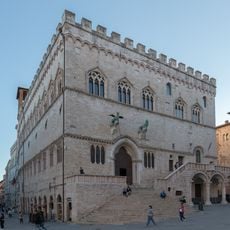
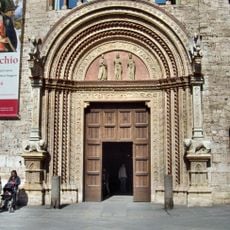
Porta Eburnea, Medieval city gate in Perugia, Italy.
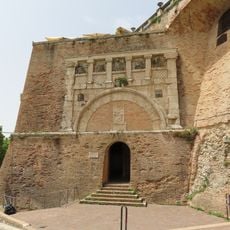
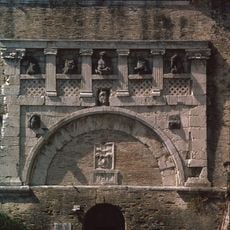
Porta Eburnea is a medieval city gate in Perugia featuring a pointed arch constructed from solid travertine marble blocks. The structure forms an almond-shaped passage through the western city walls and marks the boundary between the modern city and the historic center.
Porta Eburnea belonged to the Etruscan circuit of Perugia, which tradition links to the inscription AUGUSTA PERUSIA - COLONIA VIBIA found on nearly all its gates. In the 14th century the gate was rebuilt: the opening became a pointed arch, giving the popular name Arco della Mandorla, and the masonry shows protruding joints. A lion protome from the original gate survives, replicated in the Porta Trasimena on Via della Sposa.
The name Eburnea refers to ivory, linked to the elephant tusks of the district's emblem and to a nearby temple of Vertumnus once faced with ivory. Popular tradition holds the arch as lucky: the Baglioni family always passed beneath it before military campaigns. The district's symbol is still an elephant.
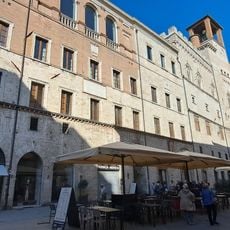
The gate is readily accessible from public areas and serves as a natural transition between the modern city and the medieval old town. Keep in mind that the surrounding area features cobblestone streets leading into the narrow passageways of the historic center.
The base of the gate retains its original Etruscan travertine blocks, while the upper structure dates from the Middle Ages. This layering allows visitors to witness thousands of years of construction history within a single structure.
The community of curious travelers
AroundUs brings together thousands of curated places, local tips, and hidden gems, enriched daily by 93,689 contributors worldwide.