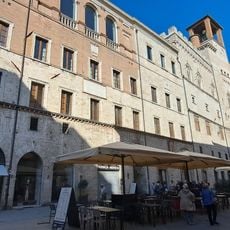
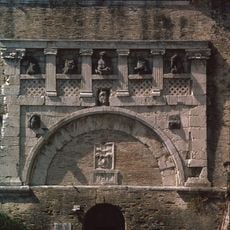
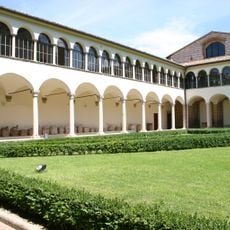
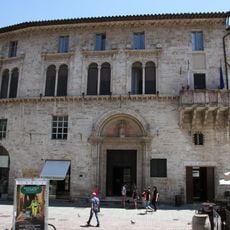
Palazzo della Penna, Renaissance palace in central Perugia, Italy
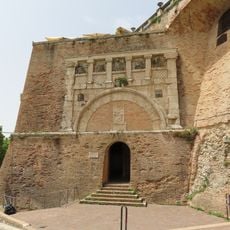
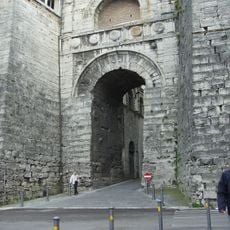
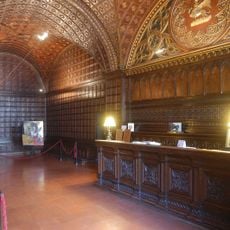
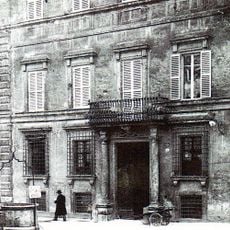
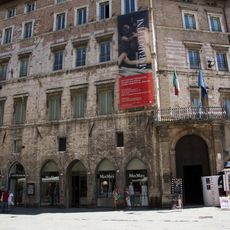
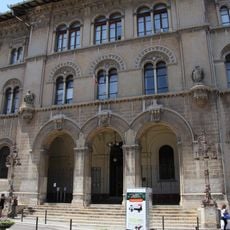
Palazzo della Penna is a Renaissance palace in central Perugia that spans four levels and incorporates ancient structures, including parts of the Roman Marzio amphitheater and medieval city walls. The building brings together different historical layers within a single location.
Built between the 16th and 19th centuries, the palace first belonged to the Vibi family and then to the Arcipreti della Penna. In 1821 Baron Fabrizio della Penna Crispolti bought Perugino's Madonna and Child with Saints Jerome and Francis for 5,000 scudi. The picture gallery was dispersed after Fabrizio Ricci della Penna's forced sale in 1899.
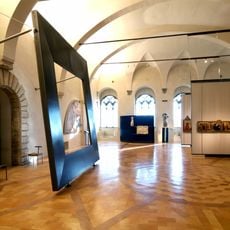
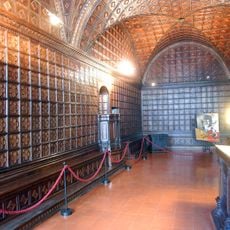
The museum's two permanent collections are named after the artists: one room traces Gerardo Dottori from his academic beginnings through Divisionist experiments to his aeropainting and Futurist Sacred Art; a vaulted hall holds six blackboards Beuys made during his 1980 Perugia performance, shown with documents of that visit.
Access between the different floors is provided by a modern spiral staircase designed by architect Franco Minissi in the 1980s. This design connects all four levels and helps visitors move smoothly through the building.
The Room of Landscapes is on the second floor, not the ground floor, and holds ideal views painted by the decorator and set designer Pasquale Angelini, father of Annibale Angelini. On the second floor's circular turret, a monochrome frieze is attributed to Giuseppe Carattoli and dated 1835.
The community of curious travelers
AroundUs brings together thousands of curated places, local tips, and hidden gems, enriched daily by 93,764 contributors worldwide.