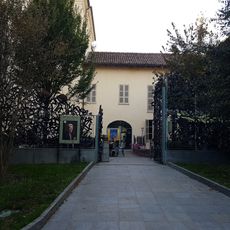
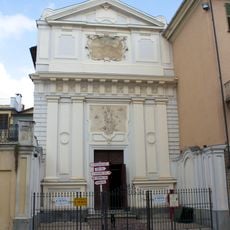
Teatro Vittorio Alfieri, Municipal theatre in Asti, Italy.
Teatro Vittorio Alfieri is a horseshoe-shaped theatre in Asti with 103 boxes over four tiers plus a gallery, built to a design by engineer Domenico Svanascini inspired by Genoa's Carlo Felice. Its ceiling and curtain were painted by Francesco Gonin, and the Ridotto frescoes by Costantino Sereno.
Built between 1858 and 1860 on the initiative of banker Zaccaria Ottolenghi, who gathered 97 private shareholders, the Teatro Sociale "Vittorio Alfieri" opened on 6 October 1860 with Rossini's "Mosè". In 1911 engineer Antonio Vandone di Cortemilia removed the top tier of boxes to create a gallery and added an orchestra pit. The city bought the theatre in 1940 and restored it from 1979 to 2002.
The theatre's name honours Vittorio Alfieri, the Asti-born playwright, and its curtain shows his apotheosis: Fame leads him while figures from his own tragedies lift him toward immortality. The Ridotto frescoes by Costantino Sereno depict the fall of Phaeton, and Francesco Gonin painted the ceiling with the Muses and Arts descending at Jupiter's command.
The theatre stands in Asti's historic centre, right beside the Palazzo Civico, so it is reached on foot from the surrounding streets. It was closed for renovation work from 1979 until 2002, so check current opening and performance arrangements with the venue before planning a visit.
The mayor refused to license Zaccaria Ottolenghi's theatre, joking he would eat the entrance step on opening night. Ottolenghi sent him a stone slab identical to the steps with wishes of buon appetito. The 1860 curtain by Francesco Gonin shows Alfieri raised by characters from his own works toward immortality.
The community of curious travelers
AroundUs brings together thousands of curated places, local tips, and hidden gems, enriched daily by 93,104 contributors worldwide.