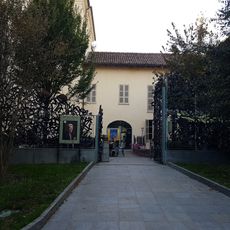
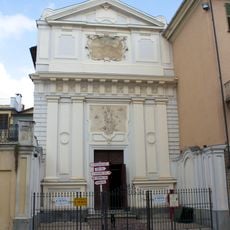
Palazzo del Podestà, Medieval palace in central Asti, Italy
Palazzo del Podestà is a three-story structure of red brick standing where Via dei Cappellai meets Via Incisa, displaying round windows and ornamented facades. Inside, the building features cross vaults, a central brick pillar, and white-red decorative framing on the window openings.
Built in the last quarter of the 13th century as a palacium novum communis, this palace served administrative and representative functions a few metres from the market of San Secondo. It was long communal property and housed Asti's municipal government between the 15th and 16th centuries. In 1810 it passed to Pietro Fautrier, and by the late 19th century it held the gas street-lighting staff and the municipal photometric service. The Podestà never resided here: the name comes from Gabiani's mistaken attribution.
The name "dei Notai" comes from the Notary College's secretariat, which occupied some rooms in the 18th century. The building's name is itself a misattribution: Gabiani, relying on Canon Incisa's writings, wrongly took it for the podestà's seat, and the label stuck.
The palace stands at the corner of Via dei Cappellai and Via Incisa, in the old centre of Asti. Two round-arched doorways, one on the east side and one on the south, framed by a white-and-red ring, give access to the building. The ground floor is lit by single-arched windows, the upper floor by two-light windows.
A marketplace once occupied the south side of the structure, revealing how this building stood at the heart of Asti's commerce. The market relocated to Piazza San Secondo in later times, yet its former presence is part of the building's story.
The community of curious travelers
AroundUs brings together thousands of curated places, local tips, and hidden gems, enriched daily by 94,193 contributors worldwide.