Temple of Jupiter Custos, Roman temple on Capitoline Hill, Italy.
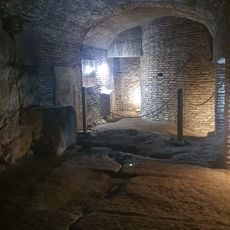
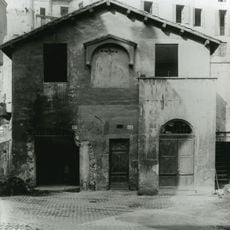
The Temple of Jupiter Custos was a minor temple probably on the Capitoline Hill in Rome, built next to the Temple of Jupiter Optimus Maximus. A relief in the Palazzo dei Conservatori places it to the right of that temple, aligned with its right side. Its exact site is uncertain: some scholars identify it with a rectangular podium in opus caementicium with basalt chips found in the 19th century during the construction of via del Tempio di Giove, now cut in two by the street, though that plan seems incompatible with a temple.
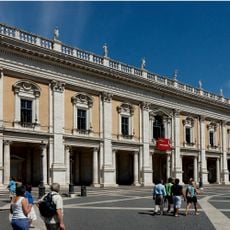
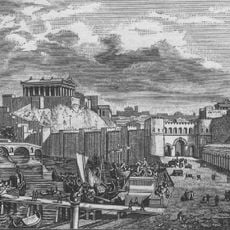
Domitian built this minor temple to Jupiter Custos to commemorate his escape from the Capitol when Vitellius' supporters besieged it in 69 AD. An Aurelian relief kept in the Palazzo dei Conservatori shows it standing beside the Temple of Jupiter Optimus Maximus, its facade facing that temple's right side. Its site is still debated: some scholars link it to a rectangular opus caementicium podium with basalt chips found in the 19th century during the opening of via del Tempio di Giove, now cut in two by the street, though that square plan fits a temple poorly. Others suggest it stood on the part of the square that has repeatedly collapsed.
The epithet Custos, "the Guardian", recalls Domitian's escape from the Capitol when Vitellius' troops stormed it in 69 AD; the temple he later built kept that memory alive. A relief in the Palazzo dei Conservatori shows the temple beside the Temple of Jupiter Optimus Maximus, aligned with its right flank.
The temple no longer stands and its site is uncertain, so there is nothing built to visit. The rectangular podium in opus caementicium with basalt chips, found in the 19th century when via del Tempio di Giove was opened, is now cut in two by that street. A relief in the Palazzo dei Conservatori places the temple to the right of the Temple of Jupiter Optimus Maximus, facing its right side.
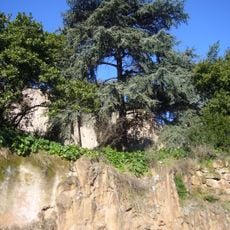
The temple's site is not agreed on: some scholars place it on a rectangular podium of opus caementicium with basalt chips, found in the 19th century when via del Tempio di Giove was opened and now cut in two by the street. Others reject that plan as incompatible with a temple, since a relief in the Palazzo dei Conservatori puts the temple to the right of the Temple of Jupiter Optimus Maximus, aligned with its right side. It may also have stood on the part of the square that has repeatedly collapsed.
The community of curious travelers
AroundUs brings together thousands of curated places, local tips, and hidden gems, enriched daily by 93,838 contributors worldwide.