Villa Lauro Lancellotti, 18th-century palazzo in Portici, Italy
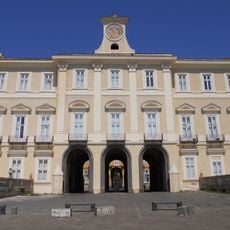
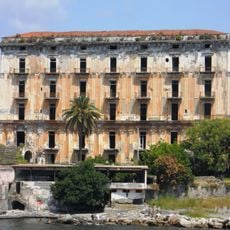
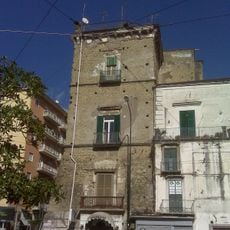
Villa Lauro Lancellotti is an 18th-century palazzo in Portici with a tripartite facade. The central section has rusticated bossage, three ground-floor portals (the main one round-arched), and a central balcony on four bossed corbels. The rear garden facade is more ornate, with an Ionic pavilion and two stair ramps linking the piano nobile to a garden that once reached the sea.
Villa Lauro Lancellotti was built in 1776 for Prince Scipione Lancellotti; the attribution to Roman architect Pompeo Schiantarelli rests on Nicola Nocerino's 1787 account. After the last Lancellotti descendant died, the palazzo was split into flats and then abandoned. Natalia Massimo Lancellotti, its last resident, died in 2006; the Fiore family later bought the complex for 600,000 euros. On 17 March 2011, during the 150th anniversary of Italian unification, the central part of the 18th-century facade and some decorated vaults collapsed. Restoration began in 2019 and the facade was rebuilt in 2022.
The upper floor's main hall is decorated with eight small scenes of Chinese life, painted at the end of the 18th century by an artist who has not been identified with certainty. The cycle belongs to the chinoiserie taste of the Bourbon period, when Portici's villas served the court and its circle.
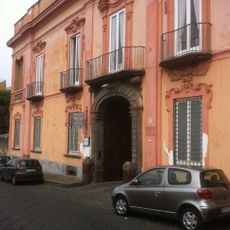
Restoration began in 2019 and the facade was rebuilt in 2022; the owners intend to turn the villa into a luxury accommodation. The building stands on Corso Garibaldi, and its rear garden once ran down to the sea, ending in a pavilion that gave access to the beach.
The garden on the property's rear side originally connected directly to the sea and was a key part of the estate's overall design concept. This water connection is less obvious today but was deliberately planned in the original layout.
The community of curious travelers
AroundUs brings together thousands of curated places, local tips, and hidden gems, enriched daily by 94,318 contributors worldwide.