Villa Giusti, Historic villa in Mandria district, Padua, Italy.
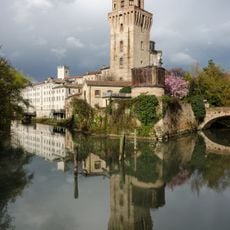
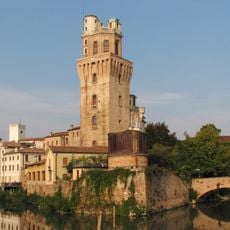
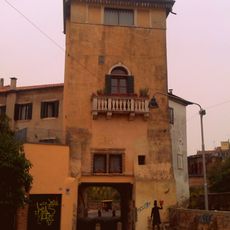
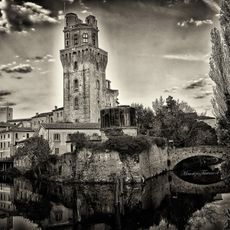
Villa Giusti is a Veneto villa in Mandria, outside Padua, originally a farm building of the nearby Villa Molin and converted into a residence in the 18th century. Its oldest element is a 14th-century dovecote tower. The villa was fully restored in the 19th century.
Villa Giusti began as a farm building attached to neighbouring Villa Molin, both held by the Capodilista family, and was converted into a residence in the 18th century; its dovecote tower dates from the 14th century. It was fully restored in the 19th century and belonged at the time of the armistice to Count Vettor Giusti del Giardino, mayor of Padua from 1890 to 1897 and senator from 1915. King Victor Emmanuel III stayed there from November 1917 to January 1918, and on 3 November 1918 the armistice between Italy and Austria-Hungary was signed in the villa, taking effect 24 hours later.
The villa takes its name from Count Vettor Giusti del Giardino, who owned it in 1918 and had been mayor of Padua from 1890 to 1897 and a senator from 1915. The room where the armistice was signed keeps the same furniture as on 3 November 1918.
The armistice room and its original furniture can be seen inside the villa, which stands in the Mandria locality outside Padua, near Villa Molin, where the preliminary negotiations were held. The tower dovecote dates from the 14th century and predates the 18th-century conversion into a residence.
A member of the Italian royal family used the estate temporarily as a residence to shelter from air raids. This temporary stay is an often overlooked aspect of the villa's history today.
The community of curious travelers
AroundUs brings together thousands of curated places, local tips, and hidden gems, enriched daily by 92,880 contributors worldwide.