Villa Romana of Minori, Roman archaeological site in Minori, Italy.
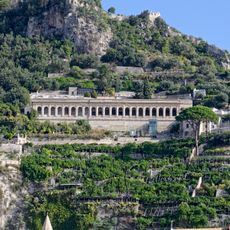
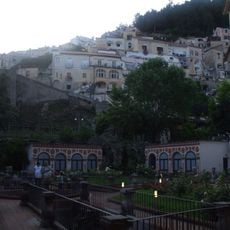
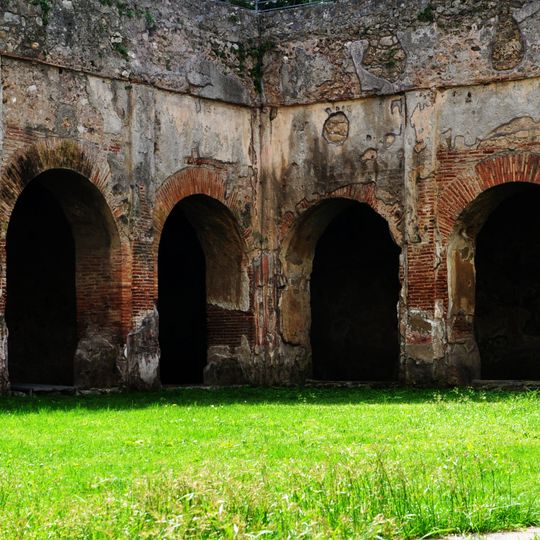
Villa Romana of Minori is an excavated Roman residence in Minori, Campania, built on a slope with a central water basin and columned passageways arranged across several levels. The complex contains dining rooms and living quarters, many of which still bear traces of decorative stonework and painted wall surfaces.
The villa was built in the 1st century as a private coastal home for a wealthy family in Campania. Systematic excavation began in 1934 after construction workers discovered underground chambers during local building work.
The villa's name comes from the Reginna Minor, the stream whose mouth it once overlooked. In the Antiquarium, built in the 1960s, seven wall panels show a water plant with green and yellow leaves below and masks of the Roman theatre above, with a panel of Mercury and a worn Medusa medallion. Oil lamps bearing Constantine's monogram indicate the villa was still occupied in Christian times, into the 7th century.
The site is close to the river in the center of Minori and easy to reach on foot from the beach. Some paths run across different levels and the ground can be uneven, so sturdy footwear is a good idea.
The villa's ceramic finds include oil lamps bearing the monogram of Constantine, indicating that occupation continued into Christian times. Pottery evidence suggests life at the site did not end with the fall of the Western Roman Empire but lasted until the 7th century, when alluvial material from the Reginna Minor finally buried it.
The community of curious travelers
AroundUs brings together thousands of curated places, local tips, and hidden gems, enriched daily by 93,031 contributors worldwide.