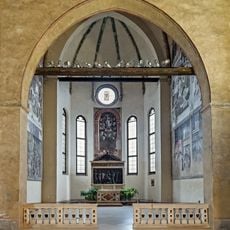
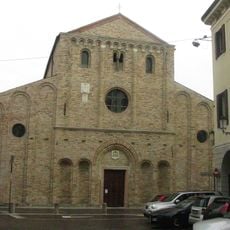
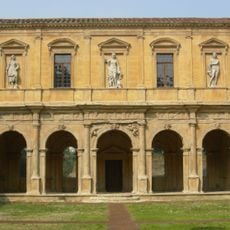
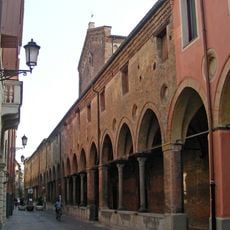
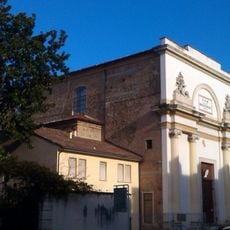
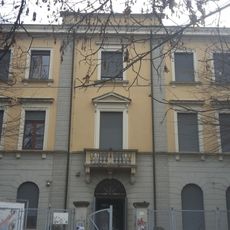
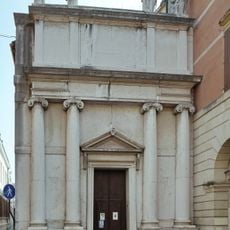
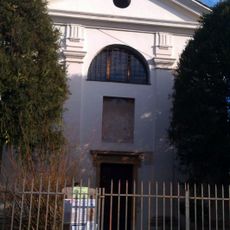
Chiesa di Sant'Eufemia, Early Christian church in Padua, Italy
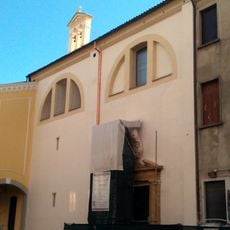
The chiesa di Sant'Eufemia was an Early Christian church in Padua featuring typical architectural elements of that period, including a north-facing apse. The structure shaped the layout of the adjacent street, which curved to follow the apse's line.
The church was constructed on a site previously occupied by a third-century Roman hospitium, which itself was built over traces of a first-century dwelling. By the medieval period, the structure gradually disappeared from view, leaving only its bell tower standing.
The church was dedicated to Euphemia of Chalcedon and reflects how Christianity spread across northern Italy in ancient times. Its name survives today through Via Sant'Eufemia, the street that preserves this religious site's memory.
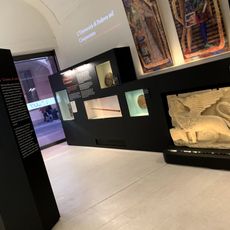
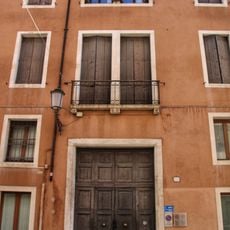
The original site is now part of Palazzo Mocenigo Querini and cannot be visited as a typical church today. Via Sant'Eufemia remains a helpful reference point for understanding the historical location and its place in the city's layout.
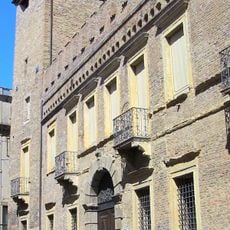
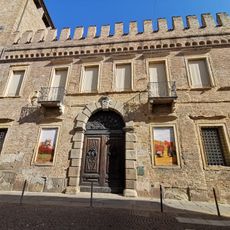
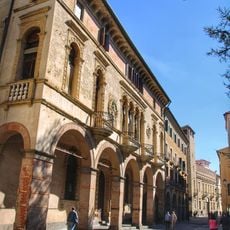
By 1440, only the bell tower was visible, prompting Antonio Mocenigo to construct Palazzo Mocenigo Querini around it. The Renaissance palace was later completed by Andrea Palladio, merging three distinct historical layers in a single location.
The community of curious travelers
AroundUs brings together thousands of curated places, local tips, and hidden gems, enriched daily by 90,776 contributors worldwide.