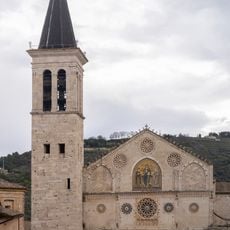
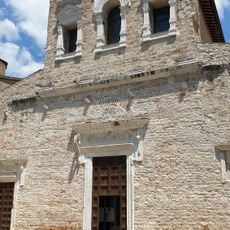
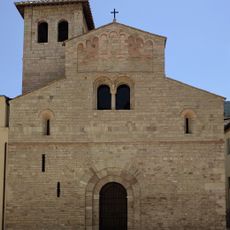
San Ponziano, Spoleto, Romanesque church building in Spoleto, Italy.
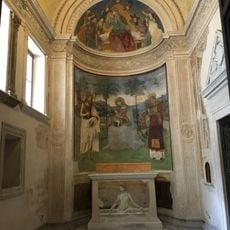
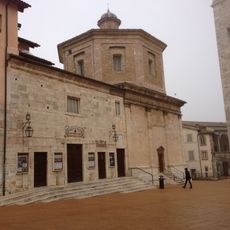
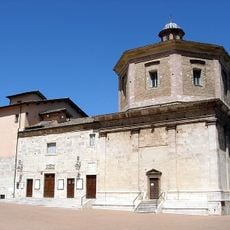
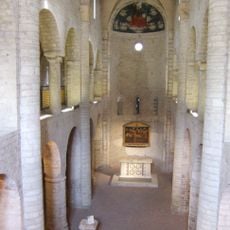
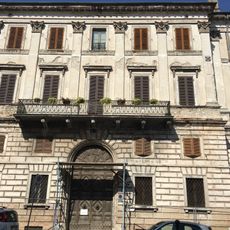
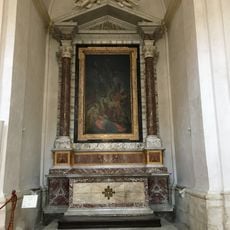
San Ponziano is a Romanesque church built between the 11th and 13th centuries on the Ciciano hill, just outside Spoleto's walls. Its exterior retains the Romanesque stone facade, while the interior was completely rebuilt in 1788 by architect Giuseppe Valadier in neoclassical style. The crypt, with 14th- and 15th-century frescoes, holds a silver urn with the saint's skull.
The church was built between the 11th and 13th centuries in Romanesque style on a paleochristian cemetery outside Spoleto's walls. In 1788 Giuseppe Valadier rebuilt the interior in neoclassical style while keeping the Romanesque exterior. In 1810 the Napoleonic government suppressed the Benedictine monastery, and today Canonesses Regular of the Lateran run the complex.
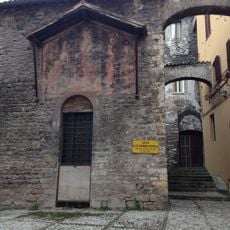
The crypt holds a group of early Christian sarcophagi, one inscribed with the Lombard name Agipertus, the first archaeologically documented Lombard in Spoleto. The church also preserves the custom of not cutting bread with a knife on 14 January, the saint's feast day, to avoid repeating the executioner's gesture.
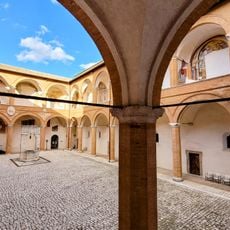
The complex stands on Colle Ciciano just outside Spoleto's walls, a few metres from San Salvatore and visible from the Foligno–Terni road. The Canonesses Regular of the Lateran run the former monastery as a religious guesthouse open to all, so lodging and shared prayer are possible on site. Ponziano's feast on 14 January brings the skull reliquary to the cathedral until the following Sunday.
Each January 14th, a procession carries the skull reliquary of Saint Ponziano from the church to Spoleto's cathedral during the patron saint's feast celebration. This annual tradition reveals the deep devotion connected to this place and its venerated saint.
The community of curious travelers
AroundUs brings together thousands of curated places, local tips, and hidden gems, enriched daily by 94,609 contributors worldwide.