Incoronata, Archaeological site in Pisticci, Italy
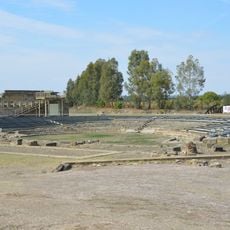
Incoronata is an archaeological site near Pisticci in southern Italy, located on a large plateau overlooking the Basento River valley. The excavations reveal an early Iron Age settlement with an associated cemetery, where houses, workshops, and graves spanning multiple centuries have been uncovered.
Occupation began in the 9th century BCE with an indigenous Iron Age settlement, whose hundreds of pit and cist tombs lie on the Incoronata and neighbouring San Teodoro hills. From the 8th century Greek pottery arrived, and in the first half of the 7th century BCE a potters' workshop on the "Greek Incoronata" hill produced both indigenous and Greek-style vases. The hill was abandoned around the end of the 7th or start of the 6th century BCE, and in the 6th century a small rural sanctuary linked to Metaponto was set up there.
The cemetery reveals how people were buried differently: men with weapons, women with weaving tools. These burial choices show how roles were organized in this early community.
Visitors should expect uneven terrain and exposed archaeological structures that give a sense of how people lived and died here. The plateau offers wide views, making it a good place for extended exploration.
The site is known in archaeology for the large number of Greek and local indigenous vases recovered, many of very high quality. Excavations since 1970 have also yielded the matrices used for the relief decorations, showing the vases were made locally.
The community of curious travelers
AroundUs brings together thousands of curated places, local tips, and hidden gems, enriched daily by 94,573 contributors worldwide.