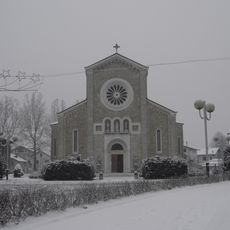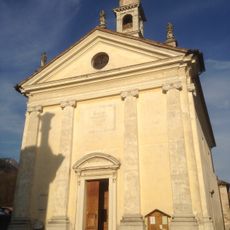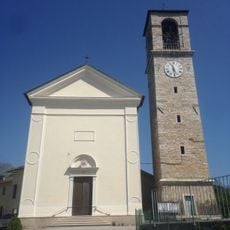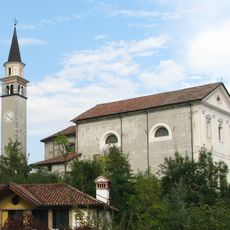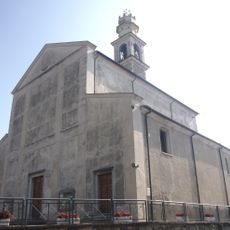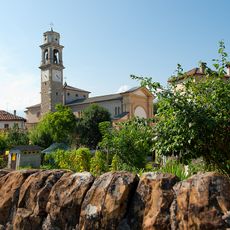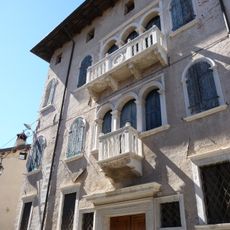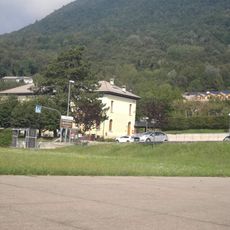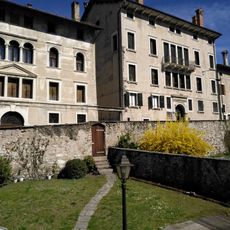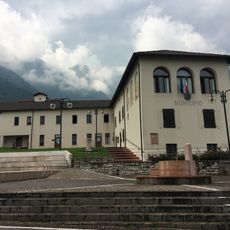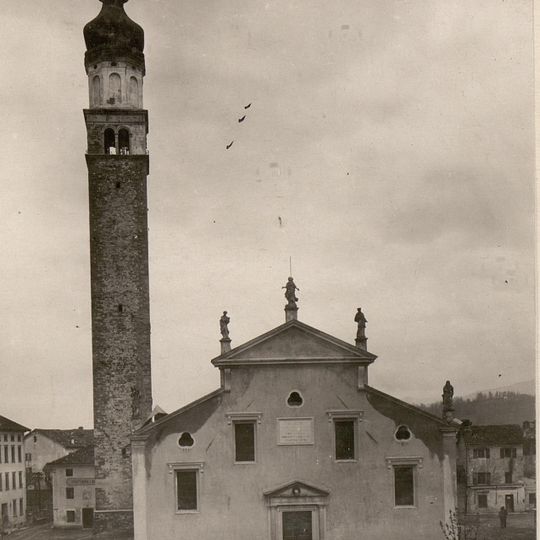
Santa Maria Assunta Church, Parish church in Lentiai, Italy
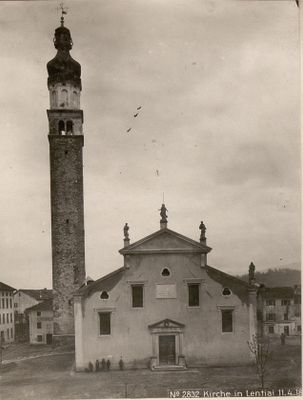
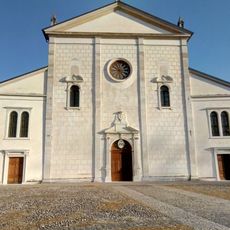
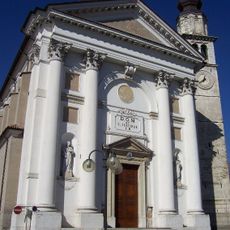
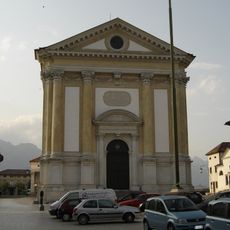
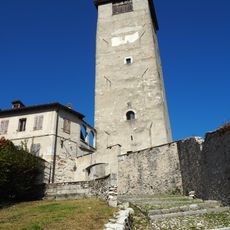
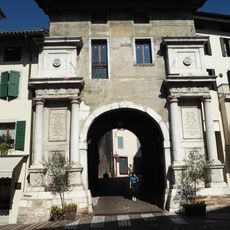
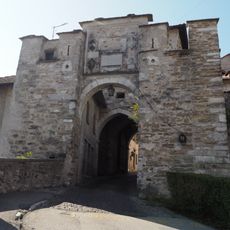
Santa Maria Assunta Church is a parish church in Lentiai with three naves, an apse, and a sixteenth-century entrance portal. The building displays simplified Baroque elements throughout its design.
The oldest document naming the pieve of Lentiai, as plebe de Lentiago, is a parchment of 1204, drawn up shortly after the Battle of Cesana (1197) in which Bishop Gherardo de Taccoli of Belluno was killed. In 1515 Fra Giovanni de Nardo ordered the bell tower completed and the nearby chapel restored; the chapel was enlarged in the 16th century, as an inscription of 1568 records. Under Bishop Michele Della Torre the church received Cesare Vecellio's coffered ceiling (in place by 1577) and frescoed Apostles; a fire destroyed the bell tower on 24 January 1718, and the church was declared a national monument in 1880.
The parish is dedicated to the Assunta, and the church keeps the Polittico dell'Assunta, ten panels painted around the mid-16th century in Titian's workshop; the young bishop Titian in it is thought to be by Titian himself. The wooden processional standard of the Madonna del Rosario with the Child is still carried in processions.
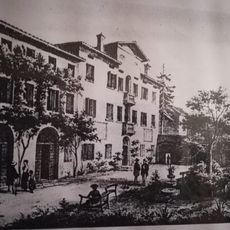
The church stands in Lentiai, a frazione of Borgo Valbelluna in the province of Belluno, within the diocese of Vittorio Veneto and the Zumellese deanery. The interior is divided into three naves, so allow time to walk the side aisles where most of the paintings hang. The complex was restored between 2000 and 2003.
The wooden coffered ceiling installed by 1577 follows a design by architect Sebastiano Serlio made for Doge Andrea Gritti's library in the Doge's Palace in Venice; Cesare Vecellio painted twenty scenes of the Life of the Virgin in its panels.
The community of curious travelers
AroundUs brings together thousands of curated places, local tips, and hidden gems, enriched daily by 94,383 contributors worldwide.