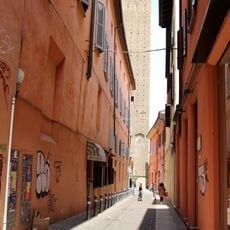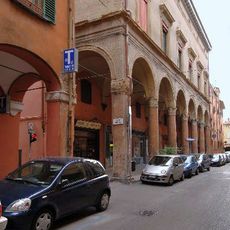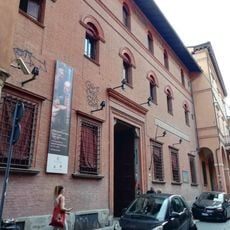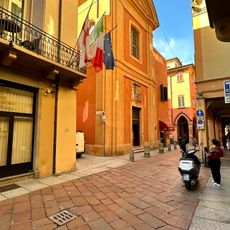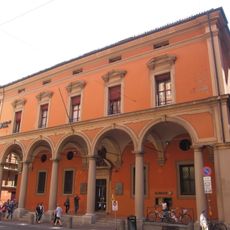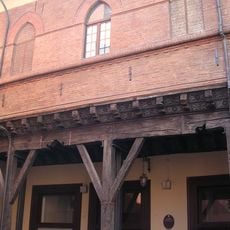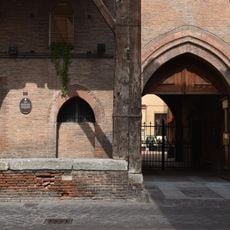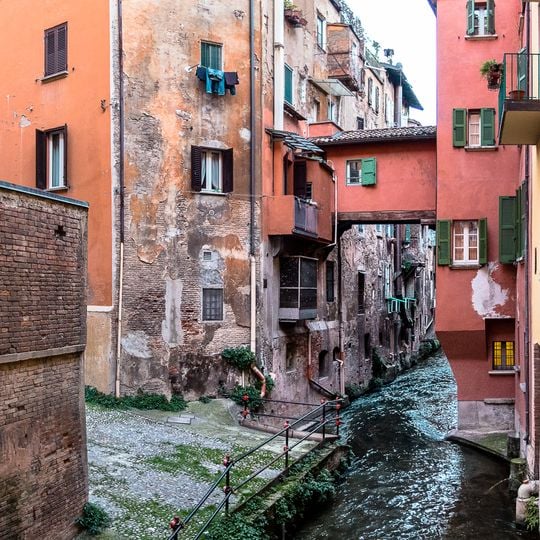
Canale delle Moline, Medieval canal in central Bologna, Italy
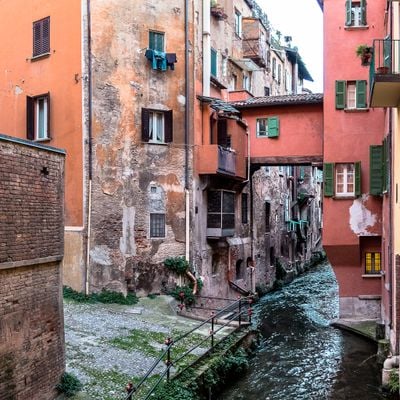
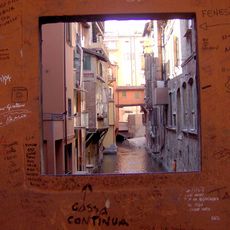
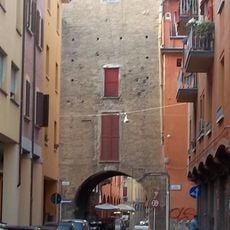
The Canale delle Moline is the branch of the Canale di Reno that turns north at Via Oberdan and runs between Via Augusto Righi and Via della Moline. It is almost entirely covered, but short open stretches can be seen from a raised garden on Via Capo di Lucca and through a small window on Via Piella.
The waterway was created in the Middle Ages as a vital part of the city's infrastructure and operated mills for centuries. These mills processed wheat and silk, making the channel essential to Bologna's economy until the early 1900s when the mills eventually ceased operation.
The name "delle Moline" refers to the fifteen municipal grain mills concentrated on this branch of the Canale di Reno, which in the 14th century ground about 700 corbe of flour a day for a city of over 60,000 inhabitants. Silk, introduced to Bologna in 1272 by a Lucchese resident, was later spun here: by the end of the 17th century 119 silk mills ran on more than 350 water wheels, and the silk trade supported some 20,000 of the city's 60,000 people.
The canal can be viewed from several vantage points including the bridge on Via Piella and the stretch between Via Capo di Lucca and Via Alessandrini. Morning and early afternoon light works best for seeing the water and the historic buildings along the banks.
The canal was engineered as a double-channel forced conduit: transverse sluices and a longitudinal partition about ten metres long split the flow, so water could run on both sides at once and keep the heavy machinery of the 15 grain mills working even in dry periods. The mills were municipal property and could grind roughly 700 corbe of flour a day.
The community of curious travelers
AroundUs brings together thousands of curated places, local tips, and hidden gems, enriched daily by 93,091 contributors worldwide.