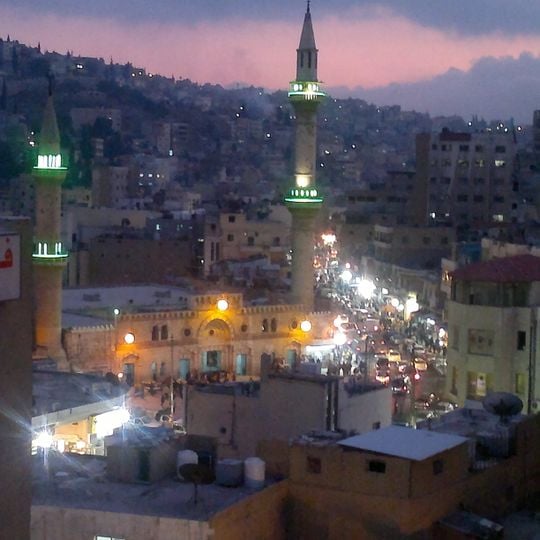
Al Husseini Mosque, mosque in downtown Amman, Jordan
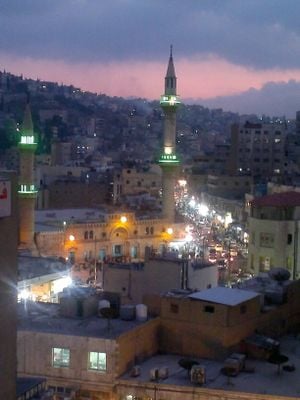
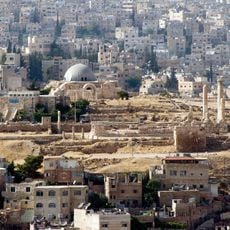
Al Husseini Mosque is a mosque located in old Amman featuring two tall minarets, a large central courtyard with a fountain, and detailed Islamic calligraphy on its walls. The building includes separate prayer spaces for women and houses a library containing religious texts and resources.
The site held a Byzantine basilica before an Umayyad-era mosque, the largest in Jordan, whose round-arched portals resembled those of the Umayyad Mosque in Damascus; a Kufic inscription named a commander Hassan bin Ibrahim. Al-Maqdisi described its mosaic-paved nave in the 10th century. Emir Abdullah I had the structure levelled in 1924 and rebuilt it, naming it after his father Sharif Hussein bin Ali.
The mosque is named after Sharif Hussein bin Ali, father of Emir Abdullah I, who was visiting Amman in 1924 when the rebuilt mosque was dedicated to him. Its small front plaza has been the starting point of national protests since 1928, when crowds opposed the Anglo-Jordan treaty; demonstrators still gather there, listen to speeches and march toward King Faisal Street.
The mosque is positioned at a central location in old Amman where main streets intersect, making it easy to reach on foot. Visitors should expect crowds during prayer times and should wear modest clothing that covers the body appropriately.
The 1924 rebuild was the first Hashemite reconstruction; four more followed, the last after a 2019 fire, completed in 2024. The 1927 Jericho earthquake brought down the stone cap of the eastern minaret, which was replaced with a wooden one. The western minaret was added in the 1940s.
The community of curious travelers
AroundUs brings together thousands of curated places, local tips, and hidden gems, enriched daily by 93,111 contributors worldwide.