Tokyo Skytree

Log in to your account

AroundUs is a community-driven map of interesting places, built by curious explorers like you. It grows with every review, story, and photo you share.
Connect to save your favorite spots, contribute locations, and create personalized routes.
By continuing, you accept our Terms and Conditions and our Privacy Policy
Add to collection
Map
Suggest a change
Share

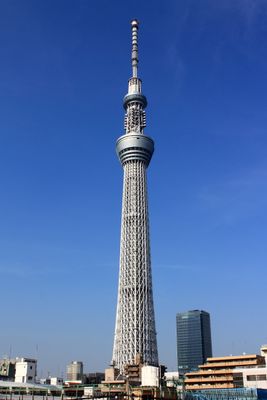
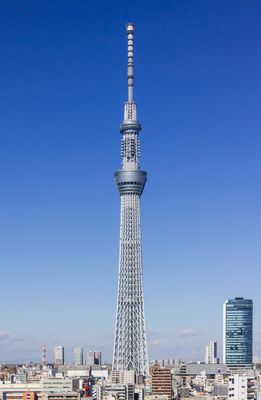
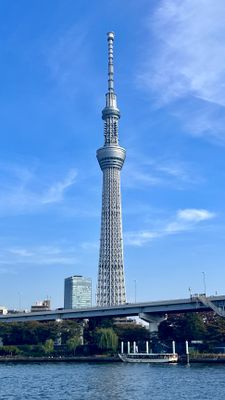
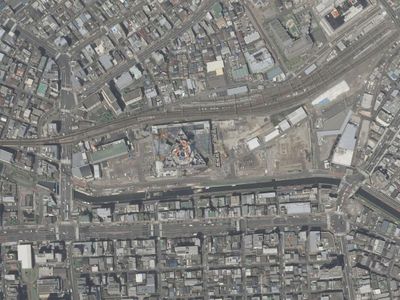
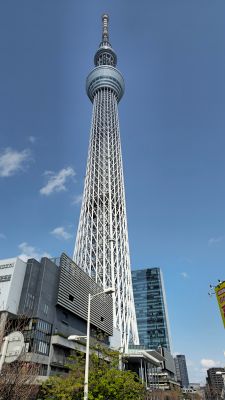
Tokyo Skytree, Communication tower in Oshiage district, Tokyo, Japan

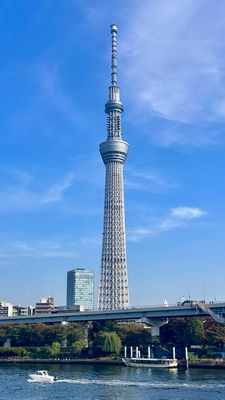
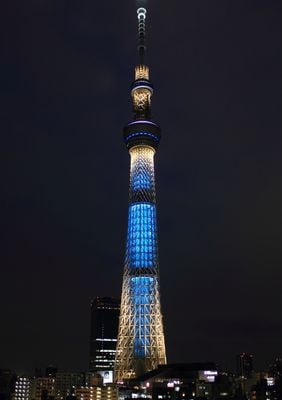
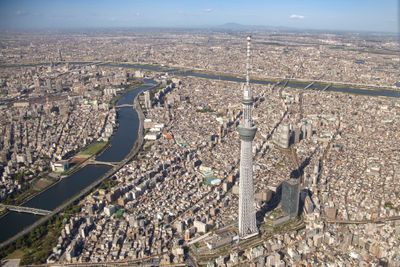
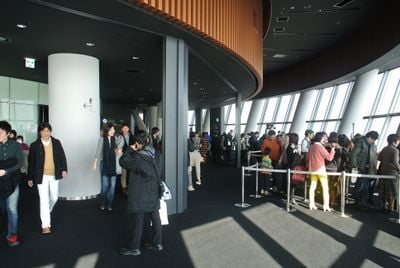
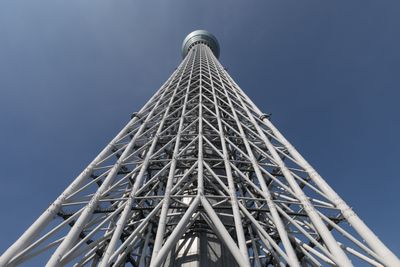
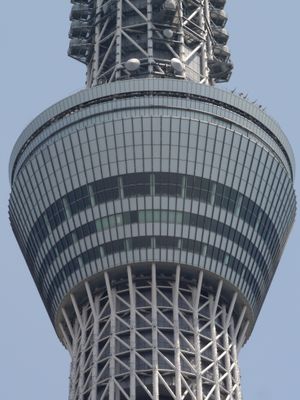
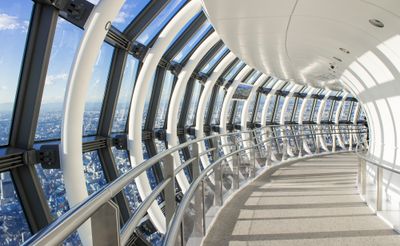
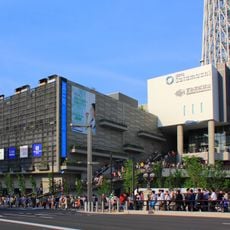
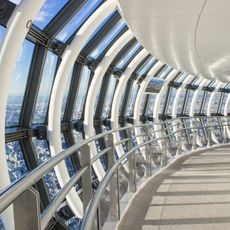
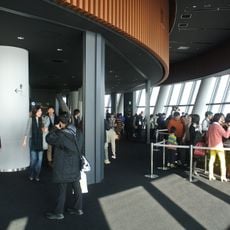
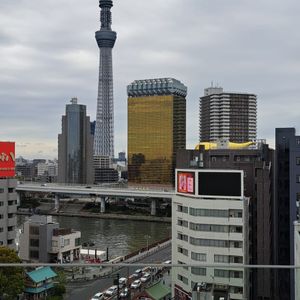
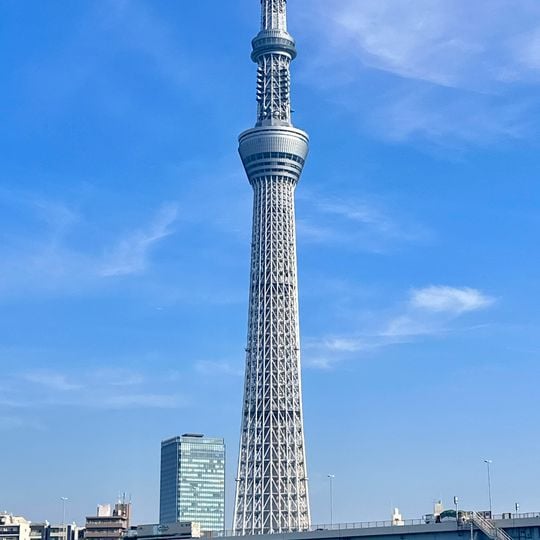
Tokyo Skytree is a steel structure in the Oshiage district that rises 634 meters (2,080 feet) and serves as a television and communication tower. Two observation decks sit at 350 meters (1,150 feet) and 450 meters (1,475 feet), offering views across the city and the surrounding region.

Construction began in July 2008 and finished in February 2012 to expand digital television broadcasting capacity. The project replaced older facilities and became a new landmark for the eastern part of the city.

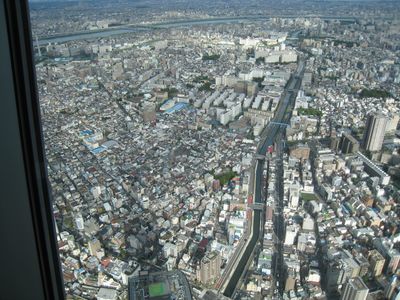
The viewing platform draws local families on weekends who come to see the city spread out below them. School groups often visit to learn about engineering and geography while watching the activity in the streets far beneath.

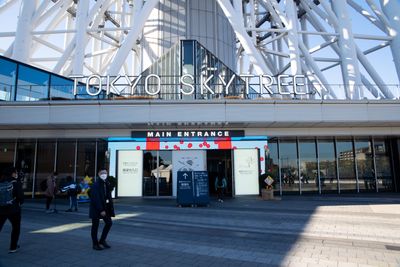
The observation decks open daily from 9 in the morning until 10 at night and connect directly to Tokyo Skytree Station or Oshiage Station. On clear days, visibility extends far beyond the city limits toward the mountains to the west.

A damping system in the core works like a giant pendulum to absorb shaking during earthquakes. Thirteen elevators carry visitors through 29 floors while digital television signals broadcast from the upper levels at the same time.

Location: Oshiage

Inception: May 22, 2012

Architects: Nikken Sekkei

Official opening: May 22, 2012

Architectural style: neo-futurism

Floors above the ground: 29

Elevators: 13

Height: 634 m

Made from material: steel

Address: 東京都墨田区押上一丁目1番1号

Website: https://tokyo-skytree.jp

GPS coordinates: 35.71006,139.81072

Latest update: December 2, 2025 22:58

The most impressive constructions in the world

This collection brings together some of the most technically ambitious structures ever built, from record-breaking skyscrapers and suspension bridges to high-speed roller coasters that push the boundaries of what steel and concrete can achieve. These sites span continents and represent decades of engineering progress, offering visitors a chance to experience human innovation at heights and speeds that were once impossible. Whether you're standing on the observation deck of the Burj Khalifa in Dubai, walking across the glass floor panels of the CN Tower in Toronto, or racing through the launch sequence of Kingda Ka in New Jersey, each structure tells a story of technical ambition and problem-solving. The collection includes landmarks like the 324-meter Eiffel Tower in Paris, completed for the 1889 World Exhibition, and modern marvels such as Tokyo Skytree, which rises 634 meters above the city. You'll find the Millau Viaduct spanning the Tarn River valley in France at a height of 336 meters (1,100 feet), the tilted medieval bell tower in Pisa leaning at a 3.97-degree angle, and Russia's SkyBridge suspended between mountain peaks at 2,320 meters (7,600 feet) elevation. These places attract millions of visitors each year, offering not just views and thrills but a firsthand understanding of what modern engineering can accomplish when designers set out to build something exceptional.

Industrial constructions: global technical and architectural innovations

This collection brings together major technical achievements that have marked the history of modern engineering. From the Hoover Dam on the Colorado, built in 1936 to produce hydroelectric power, to the ITER nuclear fusion project in France, which represents the future of energy research, these structures exemplify human boldness and skill. Each structure serves a specific purpose: crossing natural obstacles like the Brooklyn Bridge, connecting Manhattan to Brooklyn since 1883, facilitating maritime trade with the Panama Canal between the Atlantic and Pacific, or pushing height limits with the Burj Khalifa at 828 meters. These achievements are visited around the world and often offer remarkable experiences. The Eiffel Tower welcomes 7 million visitors each year who ascend to discover Paris from its 324-meter height. Shanghai's Maglev allows travel at 430 kilometers per hour thanks to magnetic levitation. The Millau Viaduct crosses the Tarn Valley at 343 meters above sea level over 2,460 meters in length. These engineering landmarks invite understanding of how industrial architecture has shaped our modern world, combining functional necessity with technical prowess that continues to fascinate visitors worldwide.

Photo spots in Tokyo

Tokyo offers photographers a wide range of subjects, from centuries-old temples to modern skyscrapers and maintained gardens. The city combines traditional Japanese architecture with contemporary urban design, creating environments that shift throughout the day. Sites like Senso-ji Temple in Taito and Meiji Shrine in Shibuya present religious structures amid urban settings, while Tokyo Skytree in Sumida and Tokyo Tower in Minato provide elevated city views. The city's different districts showcase varied aspects of Japanese culture. Harajuku and Akihabara Electric Town in Chiyoda represent modern youth culture and technology, while Omoide Yokocho in Shinjuku offers a glimpse of postwar dining alleys. Parks including Shinjuku Gyoen National Garden, Yoyogi Park, and Chidorigafuchi Park provide seasonal photo opportunities, particularly during cherry blossom season. Shibuya Crossing demonstrates urban movement, Nakameguro Canal offers waterway perspectives, and locations like Hamarikyu Gardens and Imperial Palace East Gardens show traditional Japanese landscaping. From the observation decks of Roppongi Hills Mori Tower and Tokyo Metropolitan Government Building to the street scenes of Takeshita Street and Ginza District, Tokyo serves different photographic interests.

Controversial buildings: monuments and skyscrapers that sparked debates

Some buildings have caused waves of criticism when they were built. Their unusual shape, large size, or high cost led to strong reactions. The Louvre pyramid in Paris, with its glass structure in the middle of a classical palace, surprised Parisians in the 1980s. The Guggenheim Museum in New York, with its white concrete spiral, was compared to a washing machine when it opened in 1959. The Montparnasse Tower, which has overlooked the Parisian neighborhood since 1973, even led to a law banning tall buildings in the city. These structures show how modern design can challenge local views and change how a city is seen. Other buildings still cause debate. In Mumbai, the Antilia tower rises 27 floors to hold one family. It shows wealth in a city with many crowded areas. In Pyongyang, the Ryugyong Hotel has stayed unfinished for decades. It’s a empty pyramid with 105 floors, showing big ambitions. In London, the Fenchurch Street skyscraper, called the “Walkie-Talkie” because of its shape, reflects the sunlight so strongly it can melt car parts. Places like these show how some projects raise questions about their purpose beyond looks. They involve space use, money, and how they affect daily life. (Translation in 'es', 'it', 'nl', 'pl', 'pt' fields would be provided similarly based on this pattern, but are left blank here for brevity.)

Reviews

Real people, real opinions — but not verified.

Visited this place? Tap the stars to rate it and share your experience / photos with the community! Try now! You can cancel it anytime.

coco38
@coco38

Apr 17, 2025 09:27

Magnificent. Superb experience.

« Tokyo Skytree - Communication tower in Oshiage district, Tokyo, Japan » is provided by Around Us (aroundus.com). Images and texts are derived from Wikimedia project under a Creative Commons license. You are allowed to copy, distribute, and modify copies of this page, under the conditions set by the license, as long as this note is clearly visible.

Discover hidden gems everywhere you go!

From secret cafés to breathtaking viewpoints, skip the crowded tourist spots and find places that match your style. Our app makes it easy with voice search, smart filtering, route optimization, and insider tips from travelers worldwide. Download now for the complete mobile experience.

Around Us App Screenshot

A unique approach to discovering new places

Le Figaro

All the places worth exploring

France Info

A tailor-made excursion in just a few clicks

20 Minutes