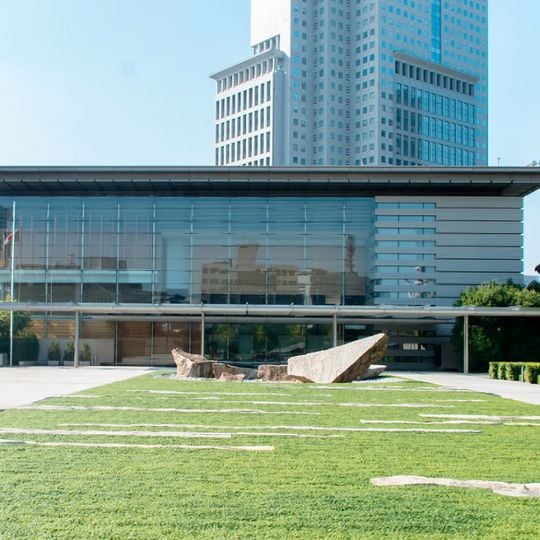
Prime Minister's Official Residence, Official residence in Nagatachō, Japan
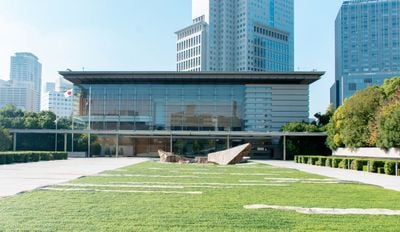
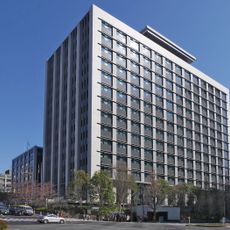
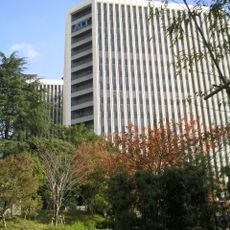
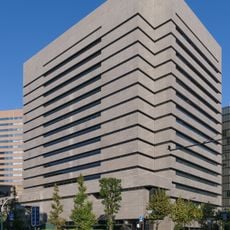
The official residence in Nagatachō rises five floors above ground with one basement level, totaling around 25,000 square meters. The building combines modern administrative spaces with reception areas and a crisis center inside.
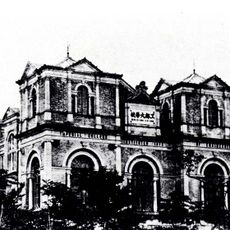
The first purpose-built residence was completed on 18 March 1929, designed by Muraji Shimomoto of the Ministry of the Treasury in an Art Deco and expressionist style influenced by Frank Lloyd Wright. It was the site of the May 15 incident in 1932, when Prime Minister Inukai Tsuyoshi was assassinated, and of the February 26 incident in 1936, when renegade soldiers attacked it. A new five-storey office building was built from 1999 to 2002 and entered service on 22 April 2002; the old residence was moved within the grounds and has served as the Prime Minister's personal quarters since 2005.
The name Kantei is used as a metonym for the prime minister's office and administration, and since the Koizumi era the romanized word has been promoted abroad, appearing even on the White House website. The building has no nickname comparable to the White House or Number 10. The intersection sign in front reads "Sōri Kantei-mae".
The grounds are not open to the public, but the exterior can be viewed from surrounding streets. The complex sits in the government district, where security measures restrict access.
The old residence, now the prime minister's private quarters, kept a bullet hole from the February 26 incident of 1936, when rebel soldiers attacked the building and Prime Minister Keisuke Okada hid in a closet while six people, including his brother-in-law, were killed. The incidents fed rumors that the residence is haunted; Tsutomu Hata's wife wrote in a 1996 memoir of seeing spirits in old military uniforms in the garden.
The community of curious travelers
AroundUs brings together thousands of curated places, local tips, and hidden gems, enriched daily by 93,128 contributors worldwide.