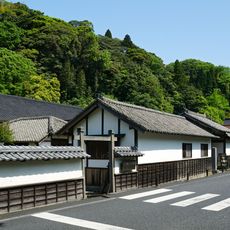
Iwami Ginzan Silver Mine, Silver mine in Ōda, Japan.
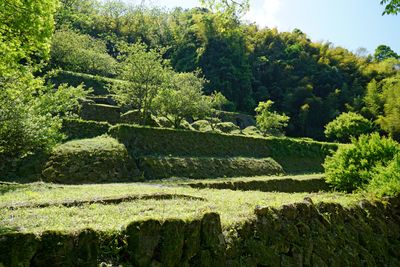
Iwami Ginzan is a former silver mine in Ōda, Shimane Prefecture, with about 600 pits and shafts cut into the hillsides. The mining area, known as Ginzan Sakunouchi, sits among forested slopes; the photograph shows terraced levels held by dry-stone walls of rough grey and brown rocks, with moss and low green groundcover on the flat surfaces and over the stone faces.
The mining complex started production in the early 16th century and supplied roughly one third of the world's silver during that period. Operations closed in the early 20th century after the ore deposits became largely exhausted.
The mine's silver was sold across East Asia as "Soma Silver", named after the village of Sama where the mine lay. Coins struck from it served as currency in Japan and in trade with China, Portugal and the Netherlands. The Kumagai family house in Ōmori, where officials weighed and checked the silver, can be visited inside.
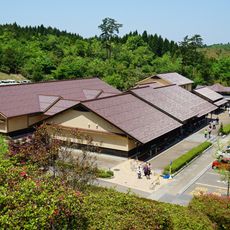
A bus from Odashi Station brings visitors to the area, and the heritage center provides information on the different shaft sites. The Ryugenji Mabu tunnel is open to the public and shows the structure of the underground passages along a short walkable section.
The mine's silver was sold abroad as "Soma Silver", a name taken from the village of Sama where the mine stood, and it carried the highest trading credit in East Asia. Coins struck from it circulated in Japan and in trade with China, Portugal and the Netherlands.
The community of curious travelers
AroundUs brings together thousands of curated places, local tips, and hidden gems, enriched daily by 92,790 contributors worldwide.