Akō Castle, Flatland castle in Akō, Japan
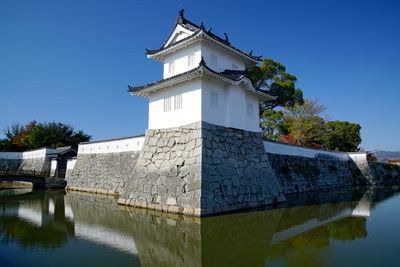
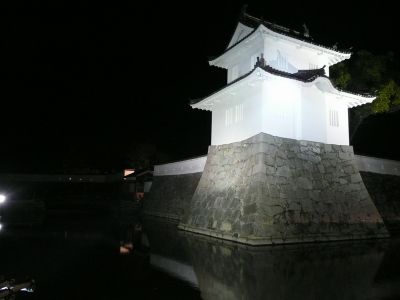
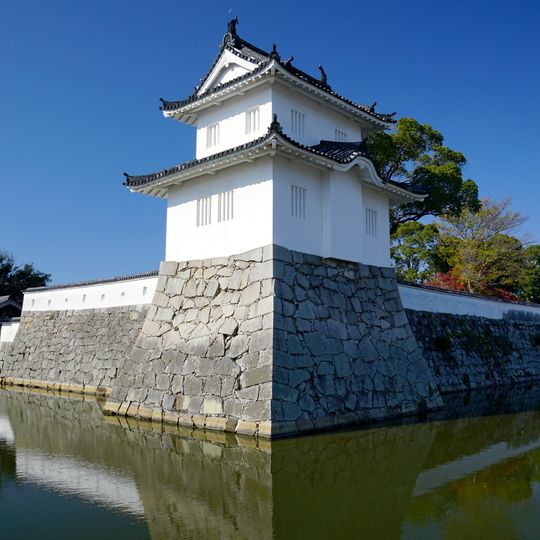
Akō Castle is a flatland fortress with concentric moated enclosures, stone walls, and multiple towers built across open ground near the coast. The site displays its original geometric layout with reconstructed gardens and clearly visible defensive structures.
The present castle was begun in 1648 by Asano Naganao and finished in 1661, replacing an earlier fort of 1600. Its tenshu base was built but no keep was ever raised. Demolished after 1873, the site became a school in 1928; the school moved out in 1981, and gates and gardens have since been restored.
The castle's name is tied to the Forty-seven Rōnin: their leader Ōishi Kuranosuke was the domain's chief retainer, and his residence's nagayamon gate stands within the grounds as a separate National Historic Site. Ōishi Shrine, founded in 1912, honours the rōnin, and the Ōishi Matsuri each December 14 draws visitors to the site.
The castle grounds lie about a 15-minute walk west of JR Banshū-Akō Station, on the route to the station from the Ōtemon gate. The Honmaru enclosure, with its restored gate, kōrai-mon and garden, is the most legible part of the site; the Ninomaru garden opened to visitors only in stages from 2016. Ground is flat and low, about 1 m above sea level.
The concentric enclosures were laid out in geometric patterns that may reflect knowledge of Western star-fort design, and the walls are pierced by many angular openings for crossfire. A five-storey keep base was built, but no keep ever rose on it; each December the city lights a scaffold replica on the platform.
The community of curious travelers
AroundUs brings together thousands of curated places, local tips, and hidden gems, enriched daily by 93,850 contributors worldwide.