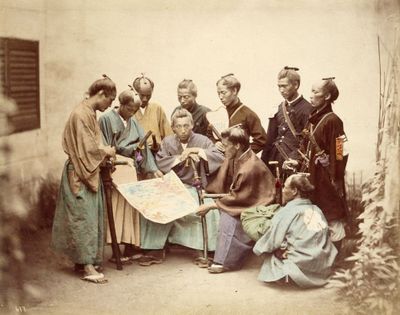
Kamakura shogunate, Feudal military government in Kamakura, Japan
The Kamakura shogunate was a military administration that operated from a coastal city, establishing a hierarchy of regional governors and local estate stewards. This system functioned through military governors called shugo who controlled provinces, while estate managers named jito collected taxes and maintained agricultural production records.
Minamoto no Yoritomo founded this first Japanese military government in 1185, marking the transition from imperial to warrior rule. The regime lasted until 1333 and fundamentally transformed Japan's political structure.
The administration introduced the Goseibai Shikimoku legal code in 1232, establishing formal regulations for samurai conduct and property management.
When visiting, understand that this system shaped Japanese society over several centuries and laid the foundation for samurai culture. Exploring historical sites in the region and learning about the feudal hierarchy helps clarify the regime's role in Japan's development.
The regime survived two major Mongol invasion attempts in 1274 and 1281, both destroyed by powerful storms that wiped out enemy fleets. These events strengthened the shogunate's grip on power and were viewed by Japanese as divine intervention.
The community of curious travelers
AroundUs brings together thousands of curated places, local tips, and hidden gems, enriched daily by 91,810 contributors worldwide.