Chūbu-Sangaku National Park, National park in Central Japan.
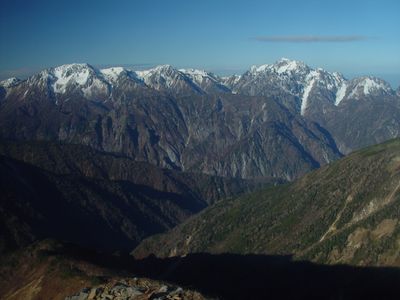
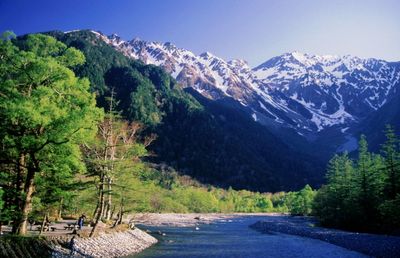
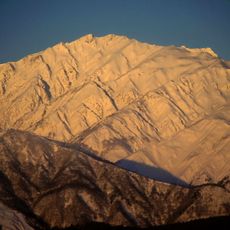
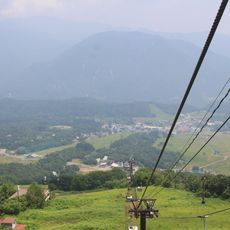
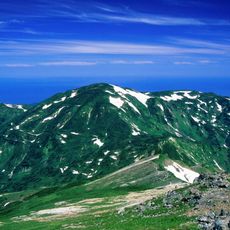
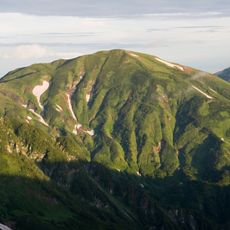
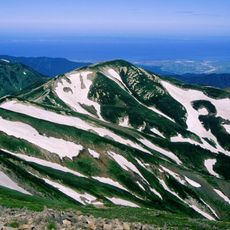
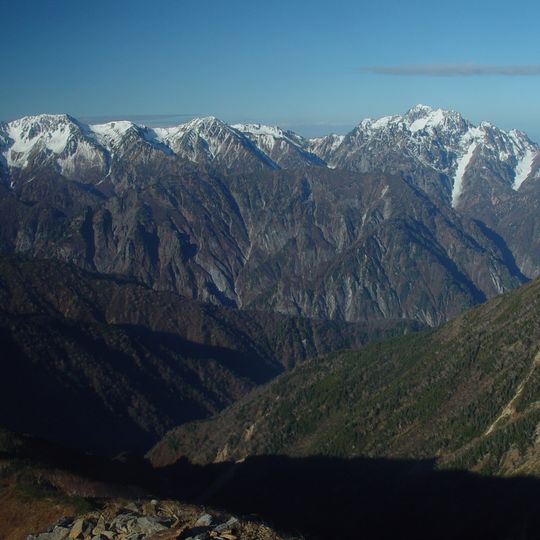
Chūbu-Sangaku National Park is a national park in the Chūbu region of Japan, centred on the Hida Mountains (Northern Alps) and spanning Nagano, Gifu, Toyama and Niigata prefectures. Its jagged peaks rise above 3,000 m, with snow lying in streaks and patches over dark rock, and dark green forest covering the lower slopes down to valleys where rivers such as the Azusa flow past pale gravel banks.
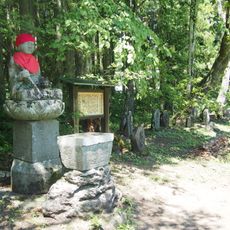
Chūbu-Sangaku was designated a national park on 4 December 1934, together with Daisetsuzan, Akan, Nikkō and Aso Kujū. The British missionary Walter Weston climbed many of its peaks from 1888 with mountain guides and published "Mountaineering and Exploration in the Japanese Alps", which introduced the range abroad. A relief of Weston was placed near the Shimizuya Hotel in Kamikōchi on 26 August 1937. The park area and plan were reviewed in 1984, with partial plan changes in 1992 and 1997.
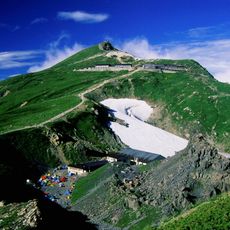
Mount Tate, with Mount Fuji and Mount Haku, is one of Japan's three sacred mountains and was climbed from the Toyama side as an object of worship. Before the Meiji era the area was closed to women. The Murodō hut, built in 1771 for pilgrims, is a nationally designated Important Cultural Property. Every April 27 an alpine horn performance accompanies the Kamikōchi Kaizan-sai at Kappa Bridge.
The park is primarily accessible through Kamikochi, the main gateway, which operates with regular bus services from mid-April through mid-November. Visitors should prepare for mountain trails and bring appropriate gear depending on the season.
The Azusa River rises on the slopes of Mount Yari inside the park and becomes the Shinano River, Japan's longest waterway. The park also holds the headwaters of the Hime, Takase and Kurobe rivers, and only the Hida River drains to the Pacific; the rest reach the Sea of Japan.
The community of curious travelers
AroundUs brings together thousands of curated places, local tips, and hidden gems, enriched daily by 94,888 contributors worldwide.