Mount Chōkai, Active volcano in Akita and Yamagata, Japan
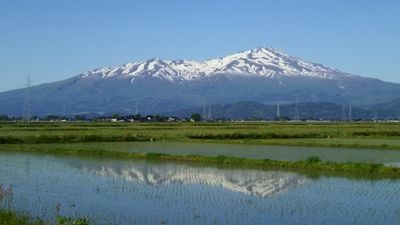
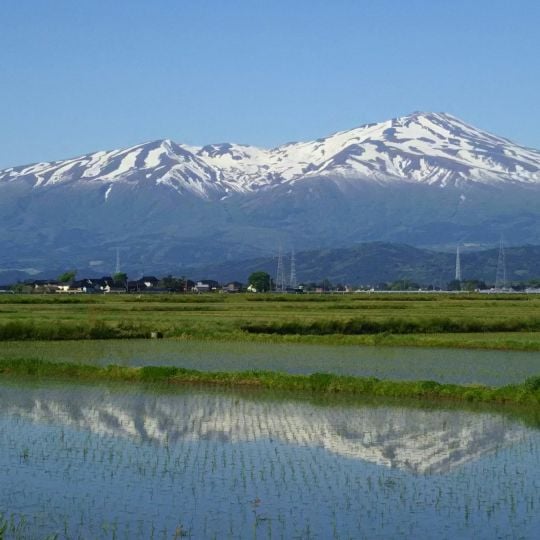
Mount Chōkai is a 2,236-meter (7,336-foot) volcano straddling the border between Akita and Yamagata prefectures, its cone-shaped silhouette visible from both sides across wide distances. The summit rises above several tiered slopes marked by deep erosion gullies and lava flows.
Mount Chōkai's recorded eruptions include events in 810–824, 840 and 871, the last with a lava flow rated VEI 2. A steam explosion in 1801 produced the lava dome of Shinzan, also called Kyōwa-dake, and killed eight people. In 1974 a phreatic eruption was first spotted from a Haneda-to-Akita flight on 1 March and continued intermittently into May.
The mountain is worshipped as Chōkai Daigongen, with Yakushi Nyorai as its original Buddhist deity, and its summit shrine is Chōkaisan Ōmonoimi Shrine. In the Edo period, Warabioka at the southern foot held 33 monastic lodgings and was the base for Shugendō ascetics. The rivers flowing from the mountain, the Gekkō and Hinata, were held sacred as sources of water.
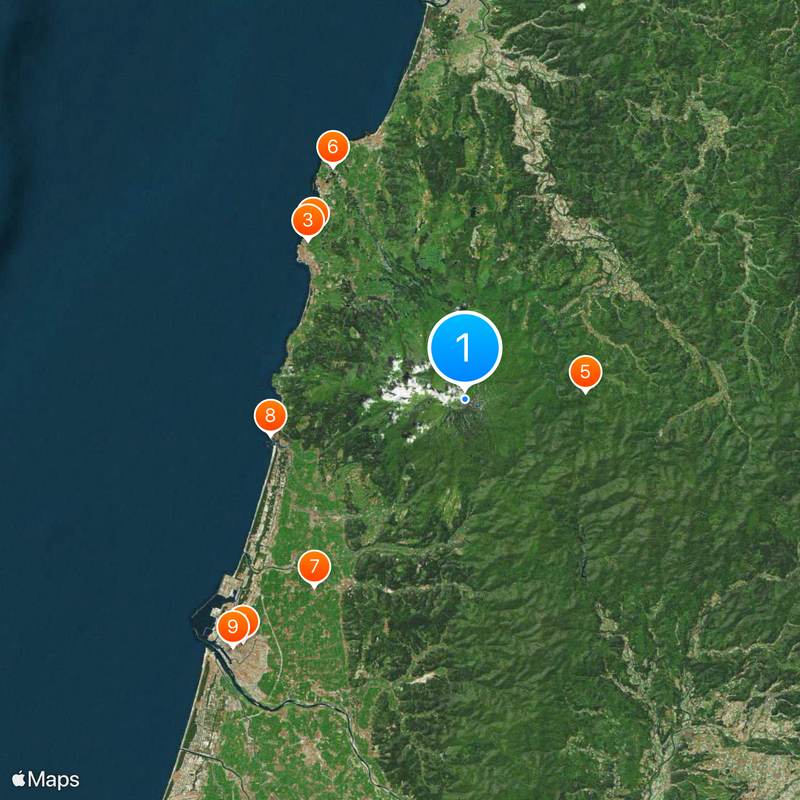
Pilgrims historically climbed from Warabioka and Fukuura in the south and from Yajima, Takizawa, Kotaki and Innai in the north. The summit stands in Yuza, Yamagata Prefecture, and reaches 2,236 m; the highest point within Akita Prefecture is 1,775 m. Snow lies on the upper slopes in summer, and the south side keeps the heart-shaped Shinji Sekkei snowfield.
Snow on the southern slope persists through summer months in the shape of the Japanese character for heart, a pattern visible from the valley below. This formation, known as Shinji Sekkei, serves as a traditional signal for the start of rice planting season.
The community of curious travelers
AroundUs brings together thousands of curated places, local tips, and hidden gems, enriched daily by 92,730 contributors worldwide.