Miyazaki Jingū, Shinto shrine in Miyazaki, Japan
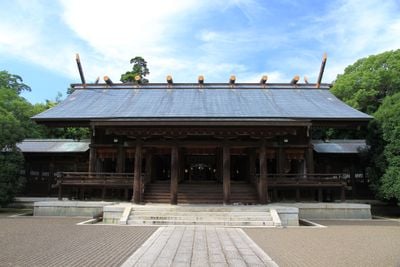
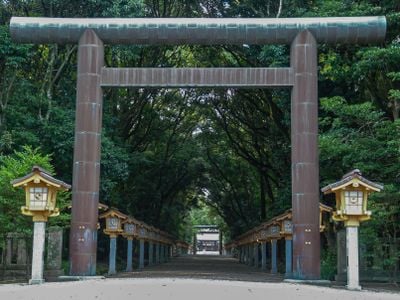
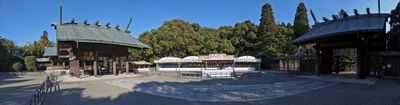
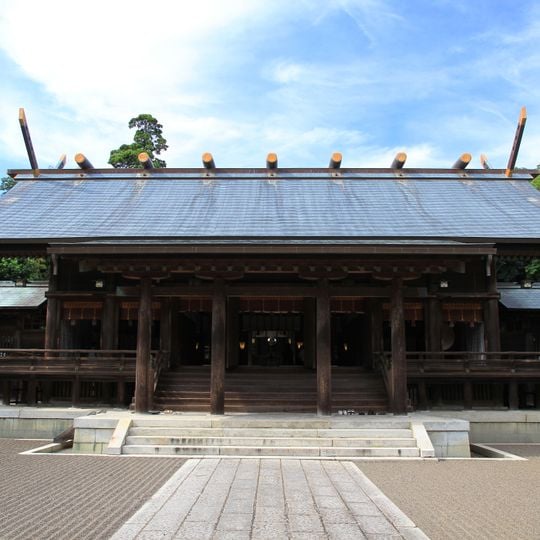
Miyazaki Jingū is a Shinto shrine whose main sanctuary is a 3-bay, gable-roofed structure with a 7-bay worship hall, built in 1907 from Sano cedar and roofed in copper. The design by Itō Chūta follows the simple, straight-line style of Ise Jingū, with chigi and katsuogi on the ridge. A broad stone stairway leads to a wooden veranda, and a large torii gate stands at the approach.
The shrine was founded to honor Japan's first emperor and received its current name in 1913 following several earlier designation changes. This renaming marked a turning point in establishing its role as a major regional sanctuary.
Locals call the shrine "Jinmu-sama." On April 3, the Jimmu Tennō Festival features yabusame horseback archery, revived in 1940 from older rites. The autumn Miyazaki Jingū Grand Festival sends a portable shrine, shan-shan horses and a children's procession to otabisho in Sedo or Ooyodo, alternating yearly.
The outer approach runs about 800 m from the first torii to the second, lined with a row of nagi trees. The shrine is an 8-minute walk from JR Miyazaki-Jingū Station on the Nippō Line, or 5 minutes from the Miyazaki Jingū bus stop. The main sanctuary and ten other buildings were registered as national tangible cultural properties in 2010.
The shrine's cedar, called "Sano cedar", came from the Sano area of the Hyuga region, not from the shrine's own grounds. Using cedar for shrine buildings is rare; the 1907 rebuilding employed it, and the main sanctuary's simple, straight lines show the influence of Ise Shrine's Shinmei style. In 2010, eleven buildings, the main sanctuary among them, were registered as national tangible cultural properties.
The community of curious travelers
AroundUs brings together thousands of curated places, local tips, and hidden gems, enriched daily by 93,244 contributors worldwide.