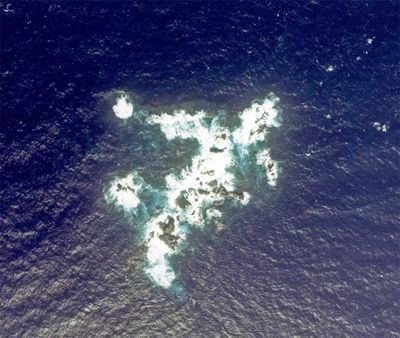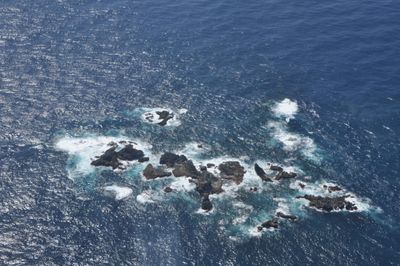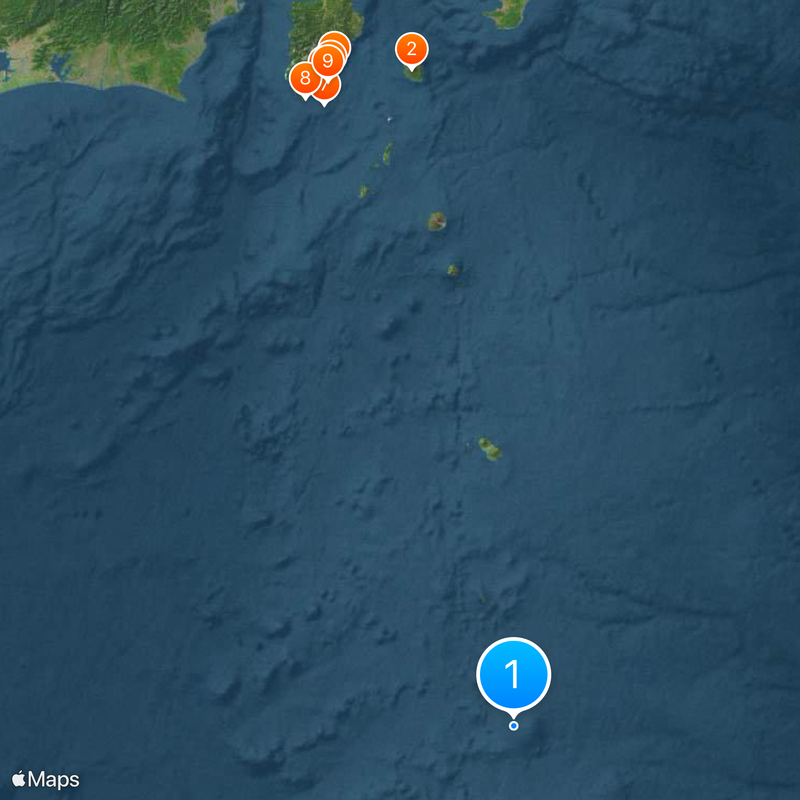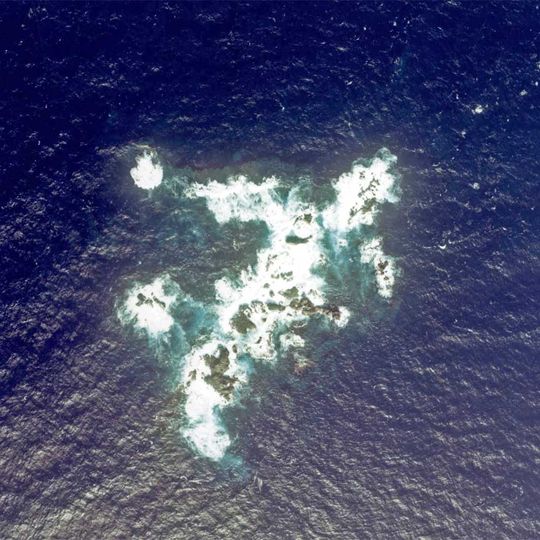
Bayonnaise Rocks, Volcanic rock formation in Hachijō Subprefecture, Japan.
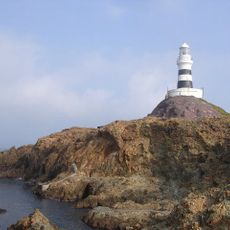
Bayonnaise Rocks are a group of three large volcanic formations rising about 10 meters above the Philippine Sea's surface. Smaller rocks surround these main structures and mark the western edge of a submarine volcanic caldera spanning about 9 kilometers in diameter at 1,000 meters depth.
French explorers aboard the corvette Bayonnaise first documented these rocks in 1850 during a marine survey south of Tokyo Bay. A research vessel tragedy in 1952 prompted Japan to establish stricter safety measures for volcanic research operations.
The Maritime Safety Agency's research vessel Kaiyo-Maru tragedy in 1952 led Japan to implement stricter protocols for volcanic research missions.
These rocks sit in open water and are accessible only by specialized research vessels or authorized expedition boats. Visiting requires favorable sea conditions and is typically restricted to scientific personnel or organized expeditions.
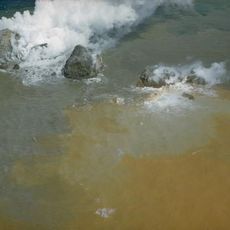
Submarine eruptions between 1952 and 1953 created and then destroyed a temporary island measuring about 150 meters long near the rocks. This rapid volcanic activity demonstrates the dynamic geological nature of the area and the power of underwater geological processes.
The community of curious travelers
AroundUs brings together thousands of curated places, local tips, and hidden gems, enriched daily by 92,529 contributors worldwide.