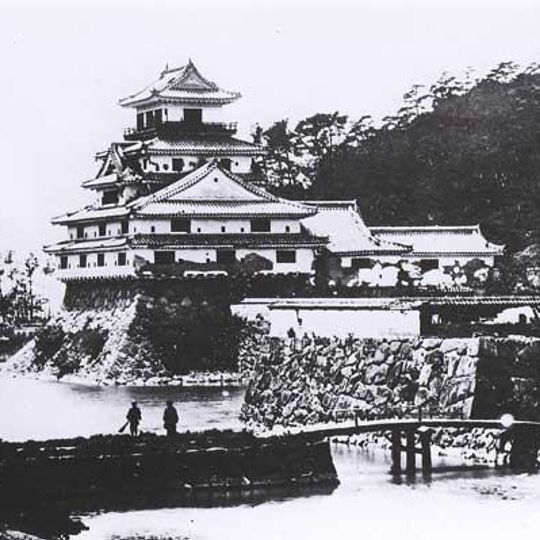
Hagi Castle, Edo-period castle ruins in Hagi, Yamaguchi Prefecture, Japan
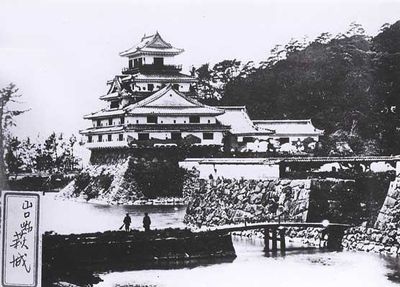
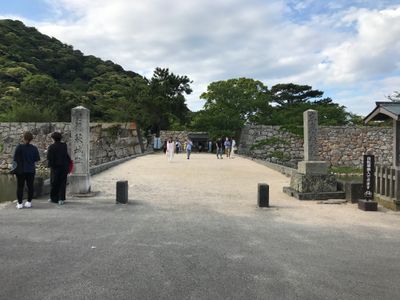
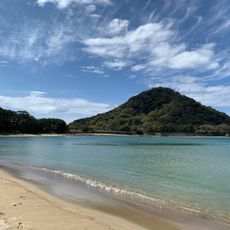
Hagi Castle is a 1604 Edo-period castle on Mount Shigetsu, built on a delta and surrounded on three sides by the sea. Its stone base rises from the water, with a five-story keep that was demolished in 1874; only stone walls and moats remain. The site includes a flatland compound at the foot of the mountain and a hilltop enclosure reached by a path.
Mōri Terumoto, on the losing side at Sekigahara in 1600, was reduced to Nagato and Suō and built Hagi Castle from 1604, completing it in 1608. He moved in during December 1604 while it was unfinished. The castle served as the Chōshū Domain seat until 1863, when the clan moved its government to Yamaguchi. In 1874 the keep and turrets were demolished under the castle abolition order.
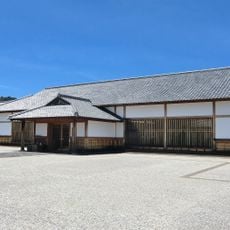
The castle's name Shizuki comes from Shizuki Mountain, where the Yoshimi clan had a fort before the Mōri built here. In the main enclosure stands the Hanae Tea House, moved from the lord's villa in 1887 and now a city cultural property. Near the second enclosure's south gate is the former Asa Mōri family nagaya, a 51.5-metre-long samurai residence, the longest in Hagi, now a museum.
Visitors can reach the ruins by taxi from Higashi-Hagi Station or using local buses that stop near the entrance. The walk to the site is moderate and accessible throughout the year.
The keep was a five-storey tower about 21 metres tall, a reduced copy of the Hiroshima Castle keep the Mori lost after Sekigahara. Its stone base was built with a wide, gently sloping foot that steepens upward, spreading the load on the delta ground. The castle was demolished in 1874, before the national castle abolition order, and in 1932 locals debated rebuilding the keep but decided the bare stone walls better marked the Meiji Restoration.
The community of curious travelers
AroundUs brings together thousands of curated places, local tips, and hidden gems, enriched daily by 93,198 contributors worldwide.