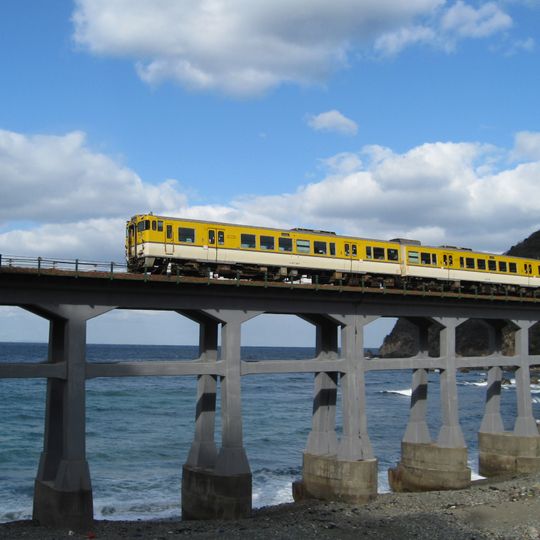
Sōgōgawa Bridge, Railway bridge in Abu, Japan
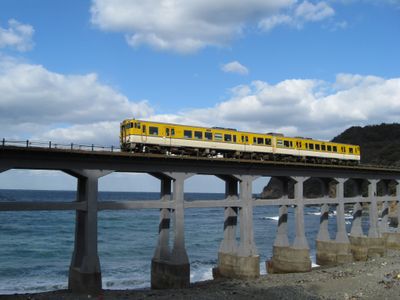
Sōgōgawa Bridge is a railway bridge in Abu, Japan, built with a concrete rigid-frame structure. The design demonstrates how load distribution and stability principles work in practice to support train traffic safely.
The Ministry of Railways completed construction of this bridge in October 1932, marking a key moment in Japan's railway development. Its completion represented an important step forward in the country's transportation infrastructure at that time.
The structure was recognized by the Japan Society of Civil Engineers as a Civil Engineering Heritage site, reflecting its role in the country's railway history. Visitors can observe how this bridge represents early Japanese engineering achievement that continues to serve its original purpose.
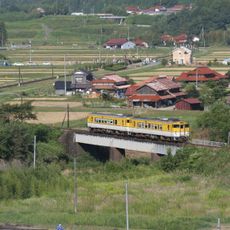
Regular maintenance work keeps the structure in good working order and preserves its original design for safe train passage. Keep in mind that this is an active railway line, so access to the bridge itself may be restricted or limited.
The concrete rigid-frame design incorporates specific engineering techniques to handle the seismic activity common in Japanese regions. This targeted construction approach shows how early Japanese engineers adapted their designs to match local environmental challenges.
The community of curious travelers
AroundUs brings together thousands of curated places, local tips, and hidden gems, enriched daily by 92,147 contributors worldwide.