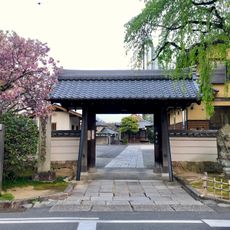
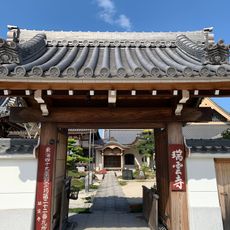
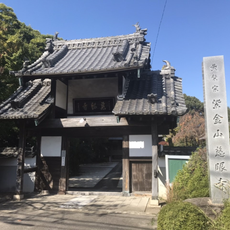
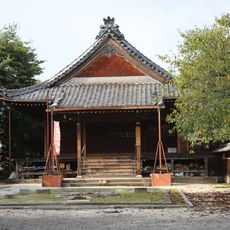
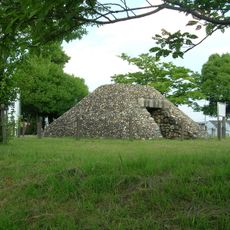
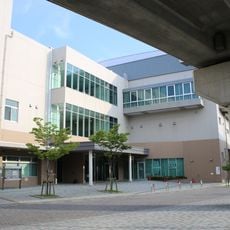
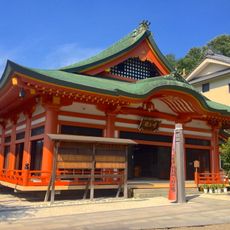
Jōjō Castle, Japanese castle ruins in Kasugai, Japan
Jōjō Castle was a flatland (hirashiro) castle in Kasugai, Aichi Prefecture, built in 1218 by Osaka Kouzen. Its central honmaru measured about 75 m east-west by 50 m north-south, surrounded by ninomaru and sannomaru and by three earthwork walls and four moats. The site is now largely cleared, with some moats and earthworks remaining.
Built in 1218 by Kosaka Mitsuyoshi, the castle passed to the Hayashi family, who returned from Ōmi and took that surname. In 1556, after Oda Nobunaga's retainer Kosaka Yūkichi died, Nobunaga installed his relative Kosaka Yukichi, who expanded the castle with about 500 men. In 1584 Ikeda Tsuneoki's troops stayed two nights during the Komaki-Nagakute campaign; Toyotomi Hideyoshi later ordered the castle dismantled.
The castle exemplifies hirashiro design, a building method that placed fortifications on flat ground between rivers rather than on hilltops. Visitors can still see how the moats and earthworks created a defensive system adapted to plains geography.
The ruins are easily accessible on foot, about a seven-minute walk from Kasugai Station on the Chuo Main Line. The site is walkable and allows straightforward exploration of the remaining earthworks and moats.
The central courtyard section is now used as a monthly parking area, a modern function that allows visitors to observe the northern and western moats from the lot. This practical reuse shows how ruins are woven into daily city life.
The community of curious travelers
AroundUs brings together thousands of curated places, local tips, and hidden gems, enriched daily by 94,027 contributors worldwide.