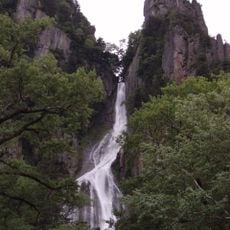
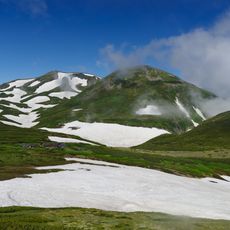
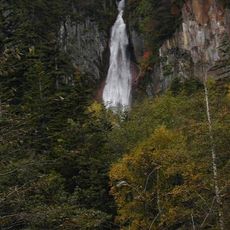
Nipesotsu-Maruyama Volcanic Group, Volcanic mountain group in Tokachi Subprefecture, Japan
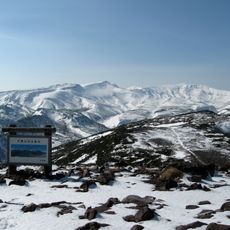
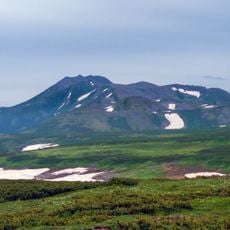
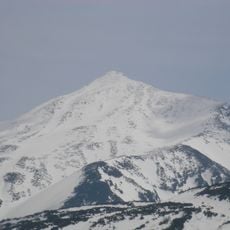
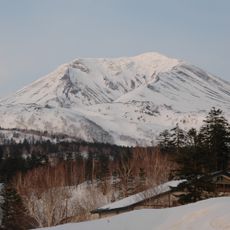
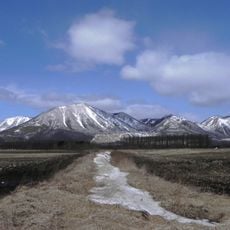
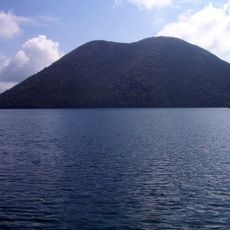
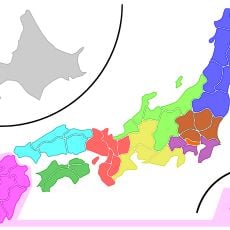
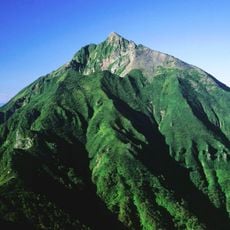
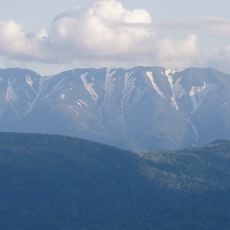
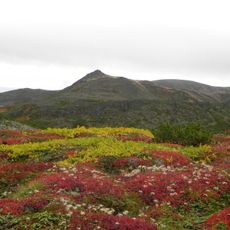
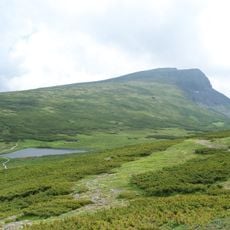
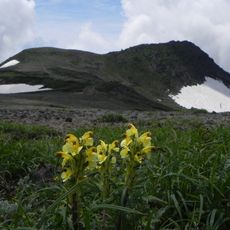
The Nipesotsu-Maruyama Volcanic Group is a cluster of stratovolcanoes and lava domes in the northern part of Tokachi Subprefecture, Hokkaido. Its highest point, Mount Nipesotsu, rises to 2,013 metres and is the easternmost peak in Japan above 2,000 metres. The group includes Mount Maru, Mount Tengu, Mount Kotengu, Mount Gunkan, 1332 Metre Peak and Mount Upepesanke, built mainly of andesite, dacite and basalt.
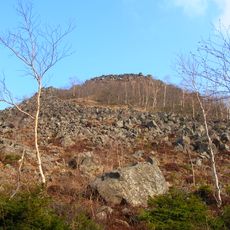
Mount Nipesotsu is an andesite-dacite stratovolcano built mainly by alternating pyroclastic flows and lava flows, with no recorded eruptions since the 800s. Mount Maru erupted in 1782 and 1827; the 1827 event sent a pyroclastic flow as far as Kitami. The group is monitored by the Geological Survey of Japan.
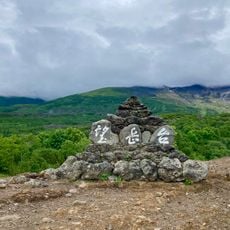
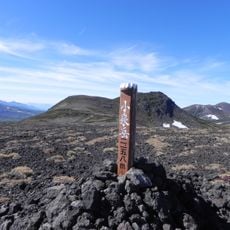
The name Nipesotsu comes from the Ainu nipes-ot-i, said to mean "where the bark of the linden tree is gathered", after the Nipesotsu River whose source lies on the mountain. The summit carries a second-order triangulation point named "Nipesotsu-yama" (二屏卒山).
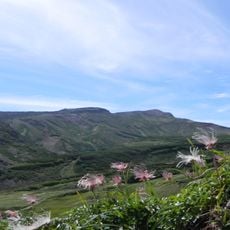
The trails are most accessible in summer, once snow has melted from the higher routes, and that window closes fairly early in autumn. Hikers heading for the upper summits should come prepared for sudden weather changes, as the terrain is open and exposed.
Nipesotsu is not on the Hyakumeizan list: Fukada Kyūya climbed it in August 1967, after finishing his book, and wrote that he had not included it, calling it a fine mountain he only came to know by climbing. It was later chosen for the Nihon 200-meizan by the Fukada Club, earning the name 'phantom Hyakumeizan'.
The community of curious travelers
AroundUs brings together thousands of curated places, local tips, and hidden gems, enriched daily by 93,171 contributors worldwide.