Mihara Castle, Japanese castle in Mihara, Hiroshima Prefecture.
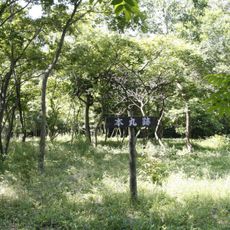
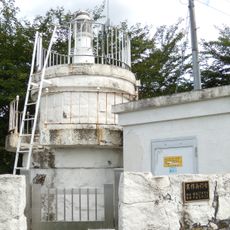
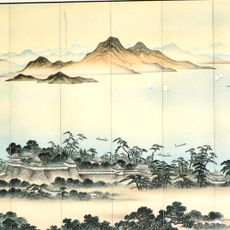
Mihara Castle is a flatland (hirajiro) castle in Mihara, Hiroshima Prefecture, built on small islands and sandbars at the mouth of the Nuta River. Its core was the honmaru with the tenshudai at the north, surrounded by ninomaru on three sides and sannomaru and outer enclosures beyond. At high tide the overlapping moats made it appear to float, hence the name Floating Castle.
Kobayakawa Takakage built Mihara Castle from 1567, using small islands at the mouth of the Nuta River and absorbing the older Sakurayama Castle of the Yamana clan. From 1580 to 1588 he expanded it into a naval stronghold with concentric enclosures, and in 1595 he retired here from Chikuzen, moving stone from Niitakayama Castle for the tenshu base. He died at Mihara in 1597; after 1619 the Asano clan held it as a branch castle of Hiroshima Domain until the Edo period ended.
The fort's name refers to its geographic position near the sea, and visitors today can still understand the placement that made maritime defense possible. The site shows typical elements of Japanese fortification design from the warrior period, including tiered stone walls and elevated platforms.
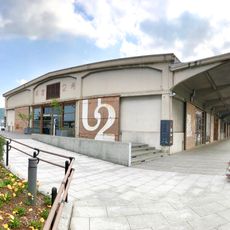
The fortification sits directly beside Mihara Station and can be reached through the station concourse without an entrance fee. The main area of the site can be explored on foot, with some paths featuring stairs and uneven surfaces.
The tenshu base was built on the same scale as that of Edo Castle, yet no keep was ever erected on it. Drawings instead show three interconnected two-story yagura, and one theory holds that a three-story tower was moved here from Tomo Castle in 1615 after the one-castle-per-province decree.
The community of curious travelers
AroundUs brings together thousands of curated places, local tips, and hidden gems, enriched daily by 93,551 contributors worldwide.