Royal Palace, Royal palace in Phnom Penh, Cambodia
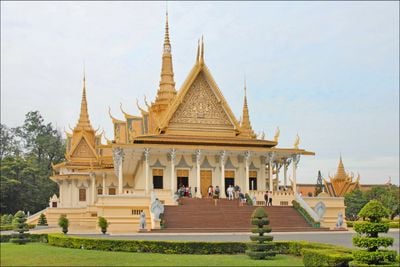
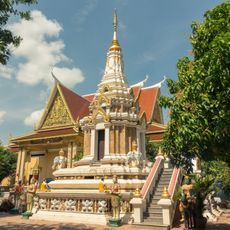
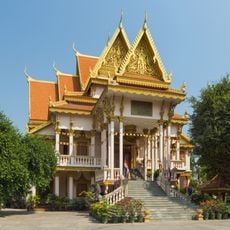
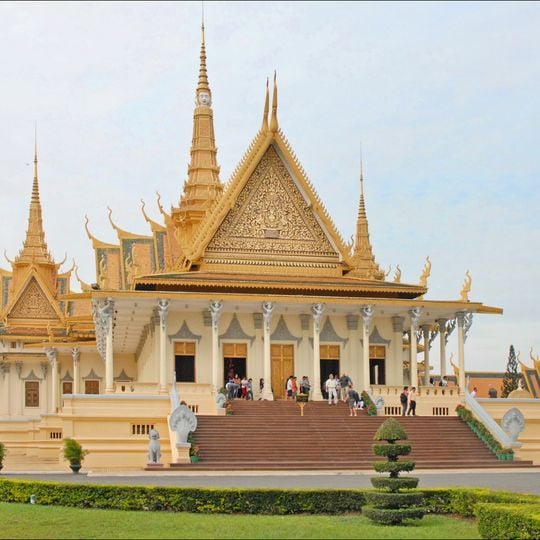
The complex comprises several buildings with gilded spires and tiered roofs in traditional Khmer style, surrounded by a wall along the Mekong River. Gold ornaments and colorful tiles decorate the facades, while manicured gardens connect the various pavilions and residences.
King Norodom moved the capital from Oudong to Phnom Penh in 1865 and built the palace between 1866 and 1870. His half-brother King Sisowath demolished and rebuilt most of it between 1912 and 1919; only the eastern wall and the Napoleon Pavilion survive from Norodom's time. The Throne Hall was rebuilt in 1917 and inaugurated in 1919. The monarchs left during the Khmer Rouge period and afterwards, then returned.
The palace's full Khmer name, Preah Barom Reacheaveang Chaktomuk Serey Mongkol, refers to the Chaktomuk confluence, an allusion to Brahma. The Throne Hall, called the Sacred Seat of Judgement, holds three royal thrones and golden busts of Cambodian kings and queens from King Ang Doung onward. Coronations and royal weddings take place there.
Visitors must cover shoulders and knees, and tickets are available daily from 8 to 11 am and 2 to 5 pm. Some areas remain closed to the public as the royal family continues to reside there. Audio guides are available at the entrance.
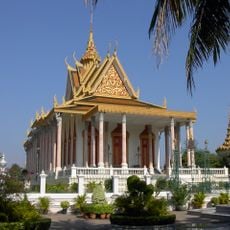
The Silver Pagoda received its name from 5000 silver floor tiles, each weighing one kilogram. Inside stands a Buddha made from 90 kilograms (200 pounds) of gold, adorned with over 2000 diamonds, including one of 25 carats.
The community of curious travelers
AroundUs brings together thousands of curated places, local tips, and hidden gems, enriched daily by 93,457 contributors worldwide.