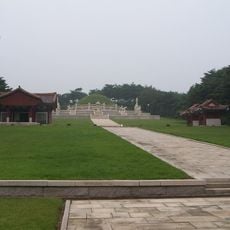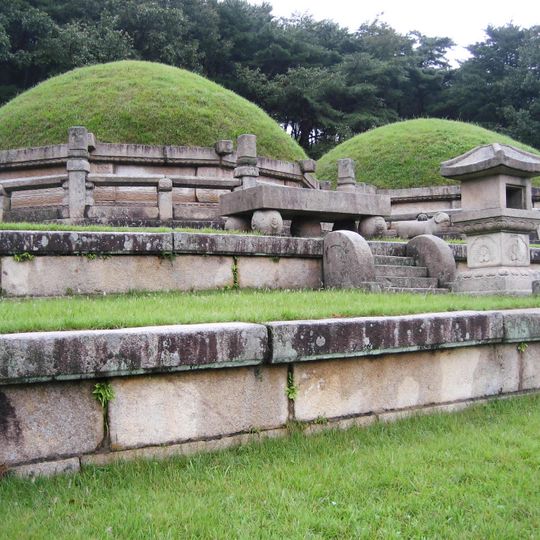
Tomb of King Kongmin, Royal mausoleum in Kaesong, North Korea
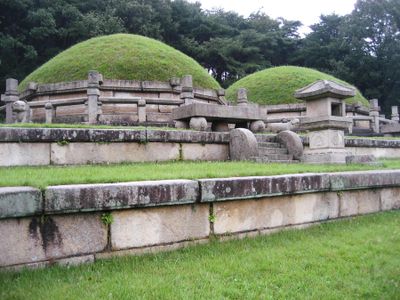
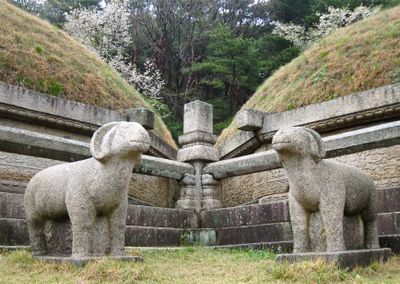
The complex consists of two burial mounds with carved granite bases topped by earth mounds, surrounded by stone statues of tigers and sheep. The entire site follows the traditional layout for royal burials in Korea.
The queen died in 1365 and the mausoleum was built until 1372 to serve as the final resting place during the Goryeo Dynasty. Kaesong became one of the most important burial sites for royalty during this period.
The spirit road leading to the mounds displays stone figures of military officers and Confucian officials, reflecting the traditions of Korean royal burials.
Visitors must follow specific protocols and dress codes when visiting the grounds. Guided tours provide detailed explanations of the architectural elements at the site.
In 1905, Japanese looters used explosives to open the burial chamber and removed numerous artifacts to Japan. The king's coffin remained in Kaesong and can still be seen at this sacred site today.
The community of curious travelers
AroundUs brings together thousands of curated places, local tips, and hidden gems, enriched daily by 91,996 contributors worldwide.