Seonunsa, Buddhist temple in Gochang County, South Korea
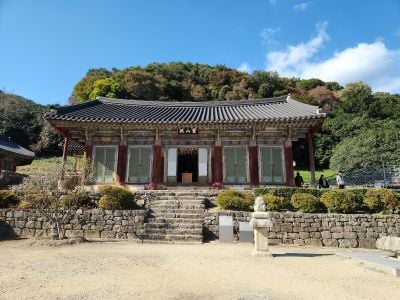
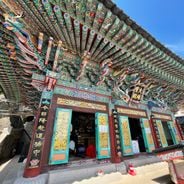
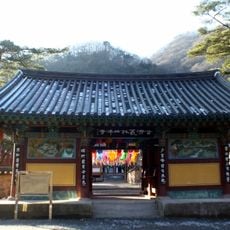
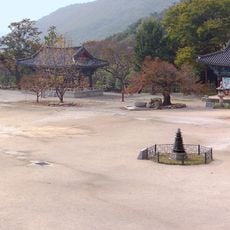
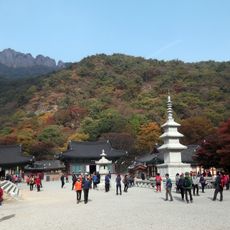
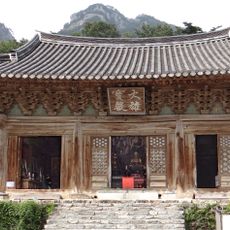
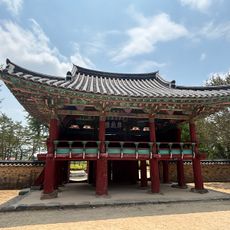
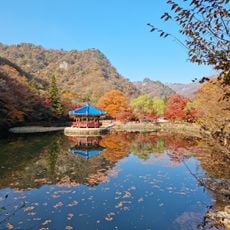
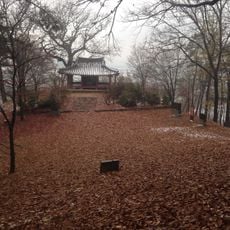
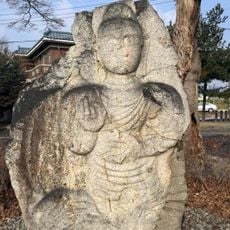
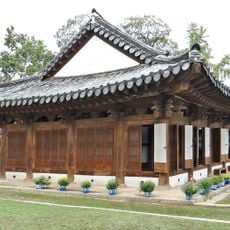
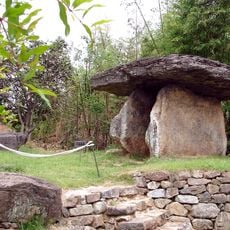
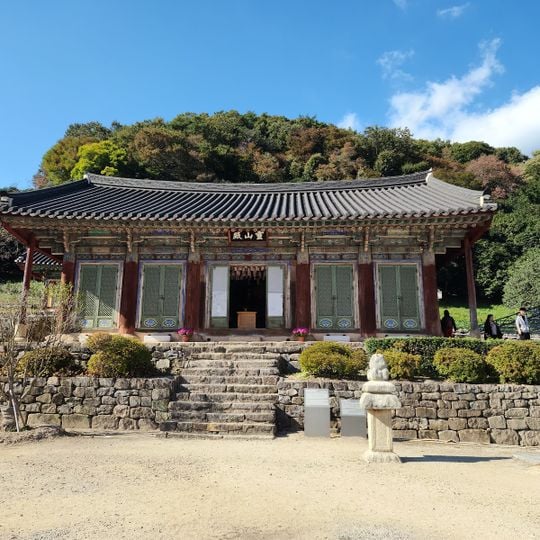
Seonunsa is a Korean Buddhist temple built on the slopes of Dosolsan mountain, close to the Yellow Sea coast. The grounds hold more than a dozen structures, including the main Daeungjeon hall, and are surrounded by old-growth forest with ancient trees and native flowering plants.
Seonunsa was founded in 577 by Seon Master Geomdan. It was rebuilt in 1318 by Seon Master Hyojeong and again in 1474 by Seon Master Haengjo. Burned during the second Japanese invasion of 1597–1598, it was reconstructed from 1614 over five years under Seong Seok-jo, governor of Mujang County.
The temple is a major centre of Ksitigarbha Bodhisattva worship, and the Naewongung Hall at Dosoram hermitage, built on a rock cliff, draws pilgrims all year. Behind the main Daeungjeon hall stands a grove of camellias about 500 years old, designated Natural Monument No. 184, and the temple holds an annual camellia festival. Temple stay programmes let visitors join Buddhist practice.
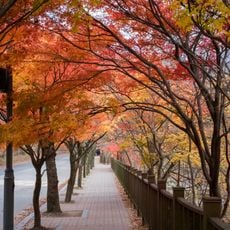
The site sits in a forested mountain area, so sturdy footwear is a good idea since the visit involves climbing stairs and walking along wooded paths. The grounds are open throughout the year, but spring draws more visitors when the trees along the trails are in bloom.
The camellia forest behind the main hall (Daeungjeon) is made up of trees roughly 500 years old, designated Natural Monument No. 184. The temple is known for veneration of Ksitigarbha Bodhisattva and holds an annual camellia festival. The Baekpa stele inscription was written by Kim Jeong-hui (Chusa), who had debated Seon Buddhism with the master.
The community of curious travelers
AroundUs brings together thousands of curated places, local tips, and hidden gems, enriched daily by 94,535 contributors worldwide.