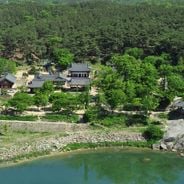
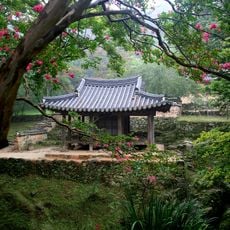
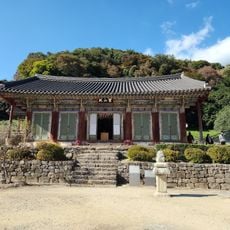
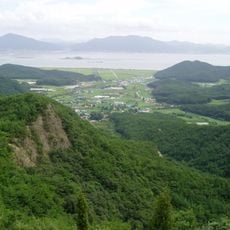
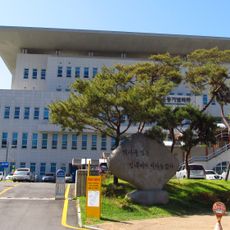
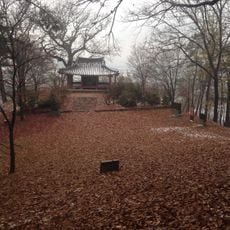
Gochang Dolmen Site, Megalithic site in Gochang, South Korea.
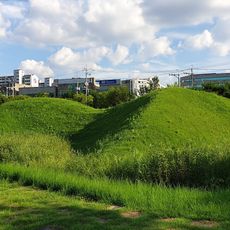
Gochang Dolmen Site contains over 200 prehistoric stone tombs topped with massive capstones scattered across rolling terrain at the base of hills. The layout includes several different dolmen types, ranging from simple to elaborate structures that reveal how burial methods evolved over time.
The Gochang dolmens were erected during the Bronze Age, roughly from the 8th to the 4th century BCE, by communities of the Jeonbuk region. The 447 tombs at the site were catalogued in surveys from the 1990s, and the Gochang, Hwasun and Ganghwa dolmen sites were inscribed on the UNESCO World Heritage List in 2000. The cemetery was used over a long span, with burials added in successive phases.
Local tradition links the dolmens to the Gochang Ko clan, whose founding ancestor is said to be buried here; the site is called Jungnim-ri or Maesan-ri by villagers. A dolmen festival is held each year, and visitors can try moving a small capstone with ropes and wooden rollers.
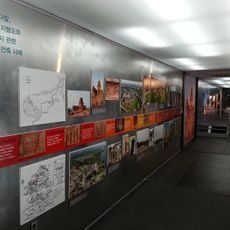
The site is easy to navigate with marked paths, informational signs in several languages, and available tours that explain the monuments. Wear sturdy shoes since the ground is uneven in places and paths wind through natural terrain.
The Gochang dolmens include the largest known capstone in Korea, at the Maesan-ri group, estimated at roughly 225 tons. Quarrying and hauling such slabs required wooden sledges, ropes and many hands; no wheels or iron tools were used. Visitors can compare capstone sizes across the groups to see how effort scaled with status.
The community of curious travelers
AroundUs brings together thousands of curated places, local tips, and hidden gems, enriched daily by 93,472 contributors worldwide.