Songnisan, Mountain and scenic site in North Chungcheong Province, South Korea
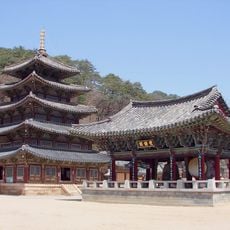
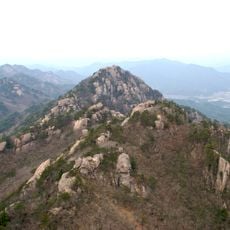
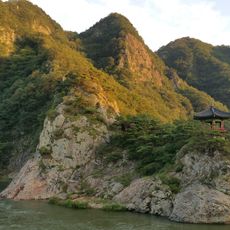
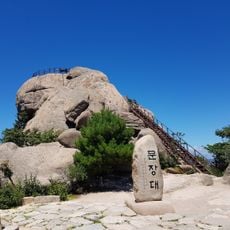
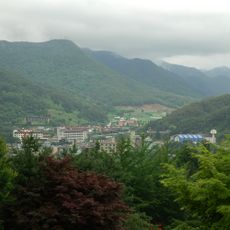
Songnisan is a mountain and national park in the Sobaek Mountains, spanning the border of North Chungcheong and North Gyeongsang Provinces in South Korea. Its highest peak, Cheonhwangbong, reaches 1,058.4 m, and the park covers 234.5 km2 across the Beopjusa, Hwayang and Hwabuk areas. The mountain has nine peaks and 17 known temples, including the 7th-century Beopjusa Temple.
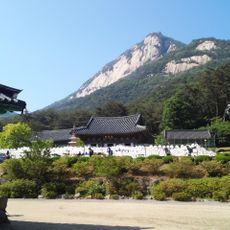
Songnisan means 'Mountain Removed from Worldliness,' a name tied to the 7th-century founding of Beopjusa, the Buddhist temple still on its slopes. The mountain became a national park on 24 March 1970, South Korea's sixth. In 2009, Beopjusa was designated Scenic Site No. 61.
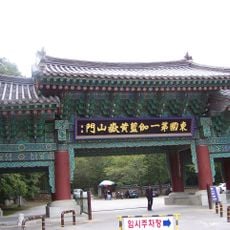
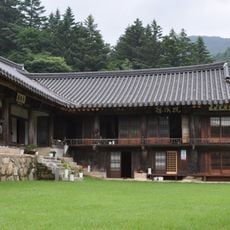
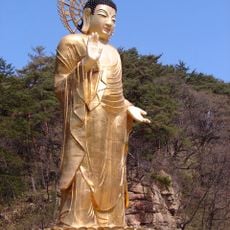
Beopjusa, founded in the 7th century, is the largest temple in central Korea and holds several national treasures, including the world's largest bronze Buddha. Turtles carved from stone appear before the entrance and on the hillsides above the temple; one in the river downstream is made from three boulders, with carved eyes on the head stone and two front flippers.
Marked trails connect three main areas where you can walk at your own pace and find rest areas throughout the park. The best conditions for hiking occur during clear weather when views are good and paths are easiest to follow.
Songnisan is home to nine peaks and seventeen known temples, and its 234.5 km² park is split into the Beopjusa, Hwayang and Hwabuk areas. Turtles are a recurring motif: sculptures stand before the temple entrance and on the hillsides above it, and in the river just downstream a turtle is formed from three boulders, one carved with eyes as the head and two as the front flippers.
The community of curious travelers
AroundUs brings together thousands of curated places, local tips, and hidden gems, enriched daily by 93,531 contributors worldwide.