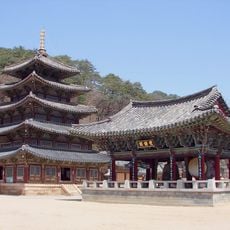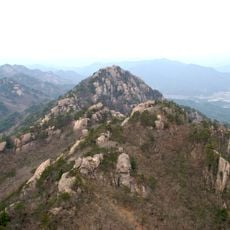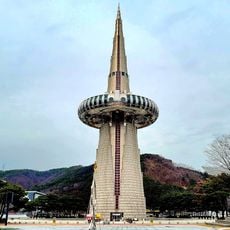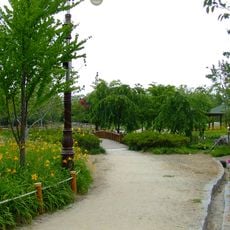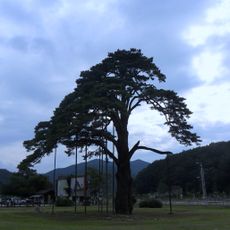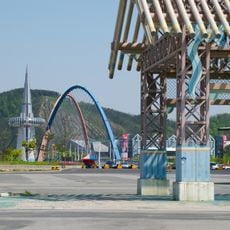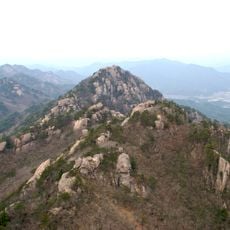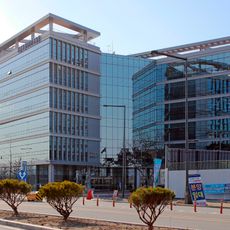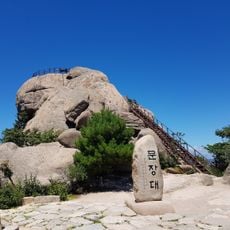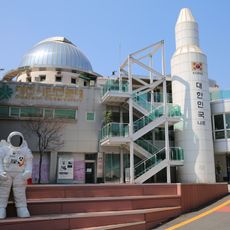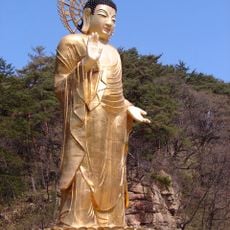
Sangdang Sanseong, Mountain fortress in Cheongju, South Korea.
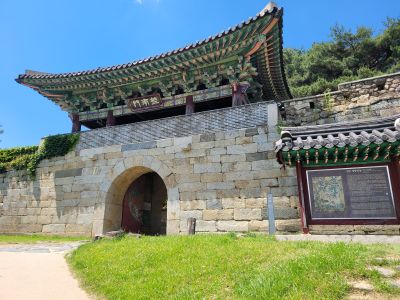
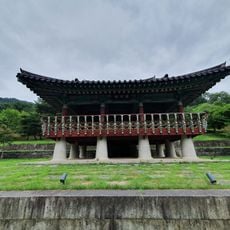
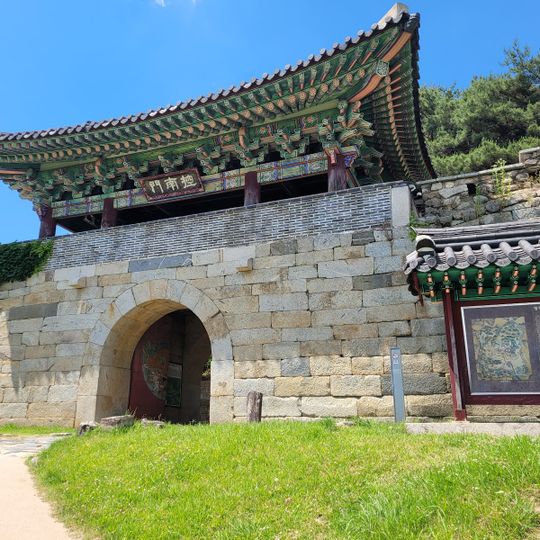
Sangdang Sanseong is a stone-walled mountain fortress on the ridge above Cheongju, with a perimeter of 4.1 km, walls 3–4 m high and an area of 704,609 m². Its gates include Jin-dongmun (east), Mi-homun (west) and Gong-nammun (south), plus two hidden gates, three bastions and three water outlets. The west gate has a plain lintel structure with an outer defensive wall and an inner turn before the gate tower.
The fortress was recorded during the Three Kingdoms period and suffered damage during the Japanese invasion of 1596. Subsequent rebuilding efforts restored and strengthened the structure, with major renovation work completed in the early 18th century.
The name Sangdang comes from Sangdang-hyeon, the Baekje-era name for the Cheongju area. Inside the walls, the fortress held three temples — Guryongsa, Namaksa and Jangdasa — plus administrative buildings, armouries and storehouses, and about 3,500 soldiers and monk-soldiers were assigned to its upkeep. The east gate is Jin-dongmun, the west gate Mi-homun and the south gate Gong-namun.
The site is accessible via several entry points, though some sections involve climbing and steep slopes, so comfortable walking shoes are essential. Plan enough time to explore the full layout of the fortress, as pathways wind through different areas with varying terrain.
The South Gate, Gongnamun, is one of three gates still standing, alongside Jin-dongmun (east) and Mihomun (west); two hidden gates, Dongammun and Namammun, also survive. Namammun, 166 cm wide and 172 cm high, had a door locked with a bar and led down the southern ridge toward the Gotdaesan beacon fire station, letting defenders slip out to surround attackers or watch the southern road.
The community of curious travelers
AroundUs brings together thousands of curated places, local tips, and hidden gems, enriched daily by 93,550 contributors worldwide.